Written by Ife Adegbie, Edited by David Udoh for The Caveat Emptor Archive
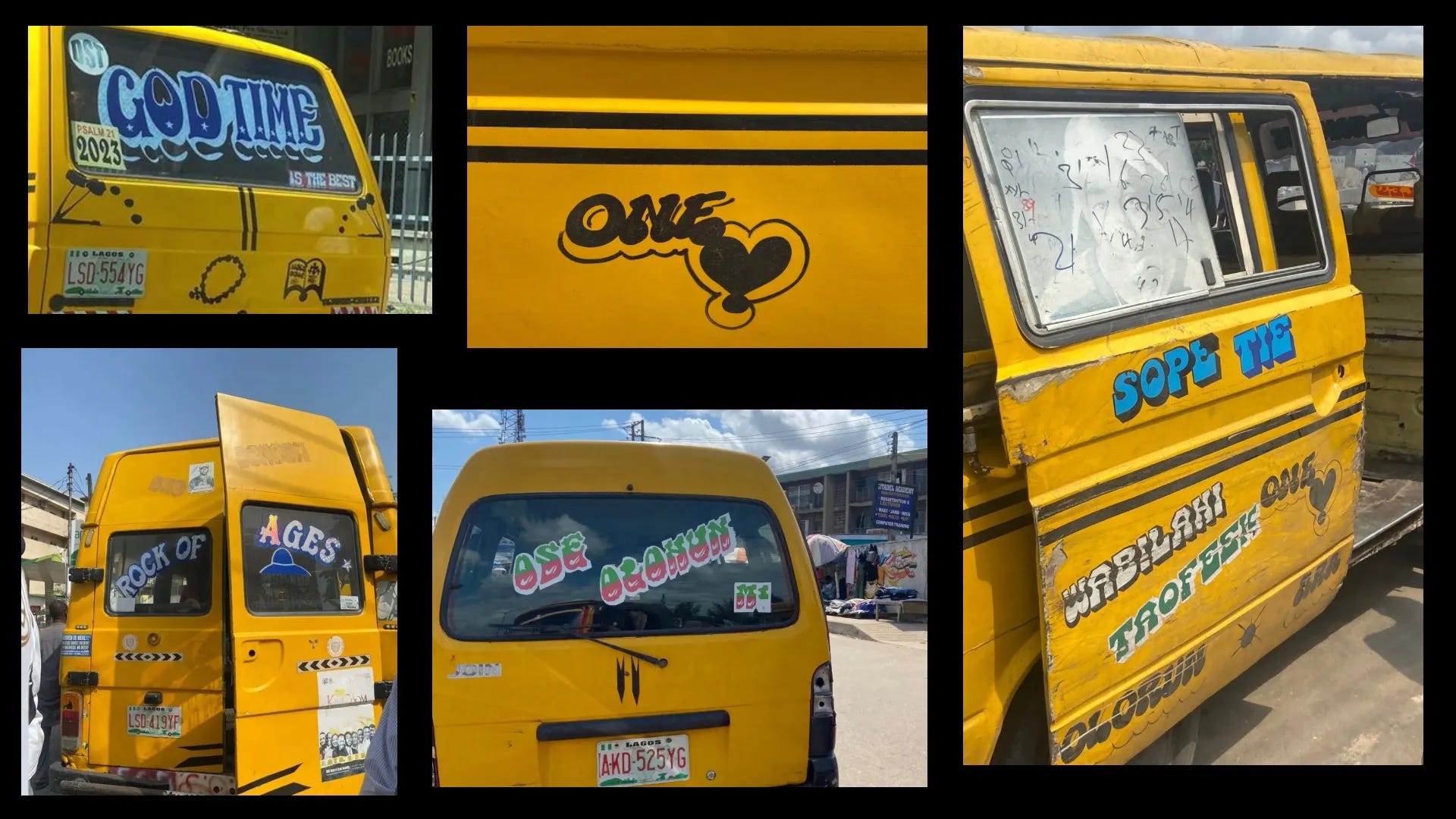
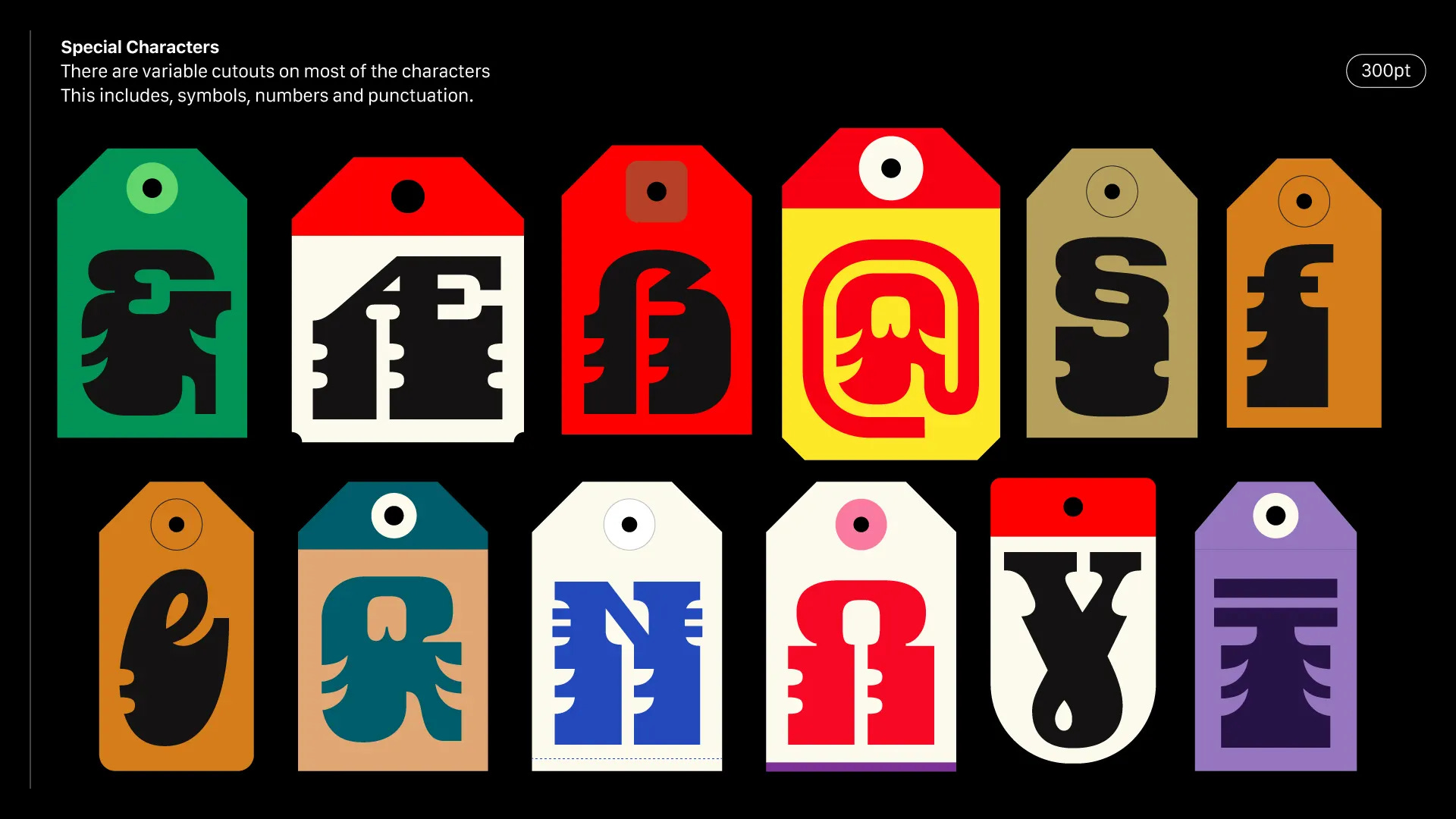
Every day, thousands of yellow buses navigate Lagos carrying more than just passengers. They carry archives. The decor adorning these vehicles functions as mobile repositories of urban consciousness, documenting religious fervour, political upheaval, musical movements, and personal philosophies. These are not mere decorations; they are social transcripts of the city, written in paint, vinyl, and aspiration. From the cowboy and Indian influences on Northern Nigerian lorries to the religious proclamations of drivers in Southwest Nigeria, every mode of transportation and its routes bear content peculiarities that reflect the societies they navigate. The design language unique to transportation decor has created a frenzy within the design community, reaching heights of global recognition as exemplified by the Danfo Font released on Google Fonts.
In Lagos, the decor found on the iconic yellow buses can currently be described as a microcosm of the city, capturing the essence of urbanity by utilising advertising, religious sentiment, political inclinations, popular culture and personal identities. This decor influences and simultaneously reflects the urban identity of Lagos and Nigeria at large while also creating social interactions between road users and drivers. Similar to the concept surrounding posters in Lagos introduced by James Yeku, by documenting transportation, we are able to capture time capsules of the city: its overarching political mood, the prevalent religious sentiments, the state and nature of advertising at the time alongside the personal beliefs, experiences and struggles of drivers and facets of trending popular culture of the time.
Initially written within the context of posters also in Lagos, James Yeku talks about this “unsightly” and defacing facet of urbanism which is found in the less developed areas of Lagos. He talks about the importance of this interaction between Lagosians and print media (religious, political and Nollywood posters) and how it forms an archive of sorts documenting the prevailing sentiment of the city in knowledge and display. James Yeku similarly validated the contributions of print media in this form to the visual culture of Lagos urbanism. Also drawing from Daniel Agbiboa, this concept highlights the materiality of Danfos and commercial transportation in Nigeria as mobile bodies of meaning, carrying within themselves archives of thought, knowledge and culture.
This form of decor (transportation decor) is a testament to the enduring legacy of commercial art in Nigeria. Primarily done by sign artists as described by Ulli Beier, these individuals shape the visual culture of the masses by bringing to life their advertisement, printing and artistic needs. Boasting education of some level along with artistic talent, these sign artists create work: billboards, portraits, book covers for the general public. A lot have evolved to modern day print shops but in nooks and crannies of Lagos and the larger Nigerian communities, they still exist in their primary form.
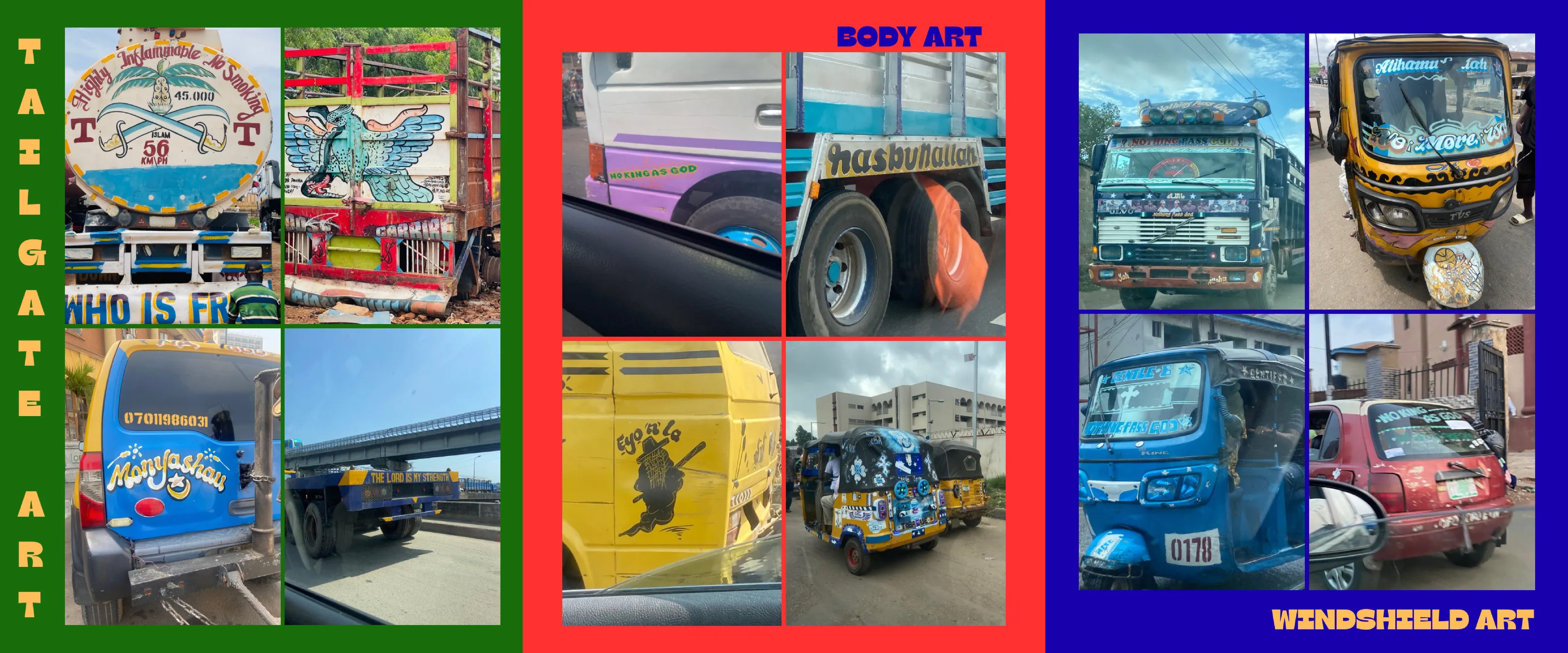
Transportation decor appears in various forms depending on the vehicle and driver’s preference. However, common in most of them are windshield art commonly associated with inscriptions and stickers, tail art commonly associated with graphics (drawings and inscriptions) and body art which takes various forms.
Late 1940s-1950s: The Emergence of Mobile Expression
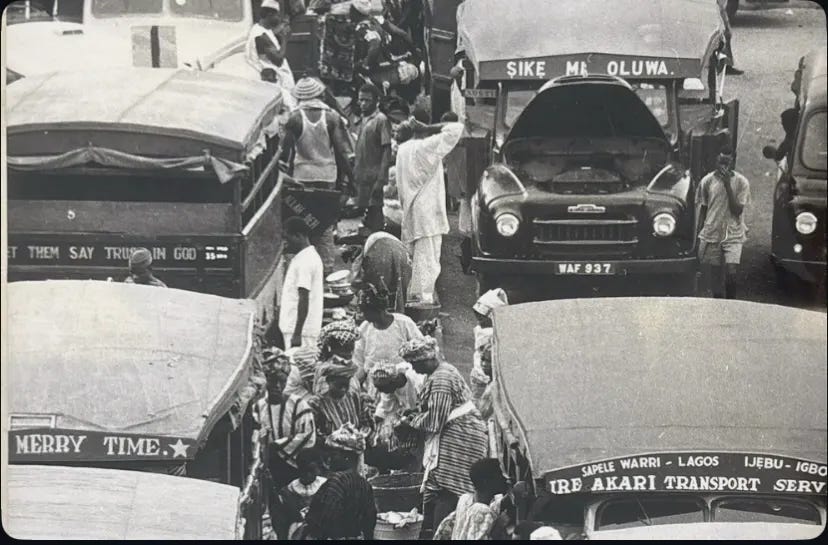
Started as a means to identify and communicate routes and transportation companies, transportation decor has evolved in content. This art form gained prevalence around the late 1940s and was carried out by sign artists who married newfound optimism within the springing urbanism and modernism with traditional moral values. They captured the general feelings of drivers: preoccupations with their roles as drivers and its surrounding harms, aspirational, religious, societal and cultural sayings, favourable foreign influences and aspirational pictures and representations. Not missing from the transportation art was transit information such as precautions (”No standing allowed” etc.), route information and the names of transportation companies. By creating work based on the times, these artists have contributed to the ongoing visual culture of urbanism within Lagos and larger Nigeria, shaping and capturing memories, knowledge and culture in frozen time capsules of vehicles.
Tam Fiofiri documented spotting transportation decor in the 1950s with quotes and inscriptions that served as protective safety mottos, warning signs, and personal declarations: “No Telephone to Heaven,” “The Lord is my Shepherd,” “Safe Journey,” and more. From its inception, transportation decor centred religious-based inscriptions within the larger context of protective safety mottos and text. These expressions reflected drivers’ acute awareness of road dangers and their reliance on divine protection, a sentiment that has remained unchanged to this day.
Similarly, in the 60s with the prevalence of Bolekajas, besides routes information such as the name of the transportation company as seen below, transportation decor contained religious proclamations and societal commentary primarily targeted towards safety, protection and personal expression. The design language remained rooted in hand-painted artistry, with sign artists working directly on vehicle bodies using enamel paints. Religious themes dominated, but increasingly, drivers requested proverbs, nicknames, and philosophical statements that reflected their worldviews and experiences navigating Nigeria’s rapidly urbanising landscape.
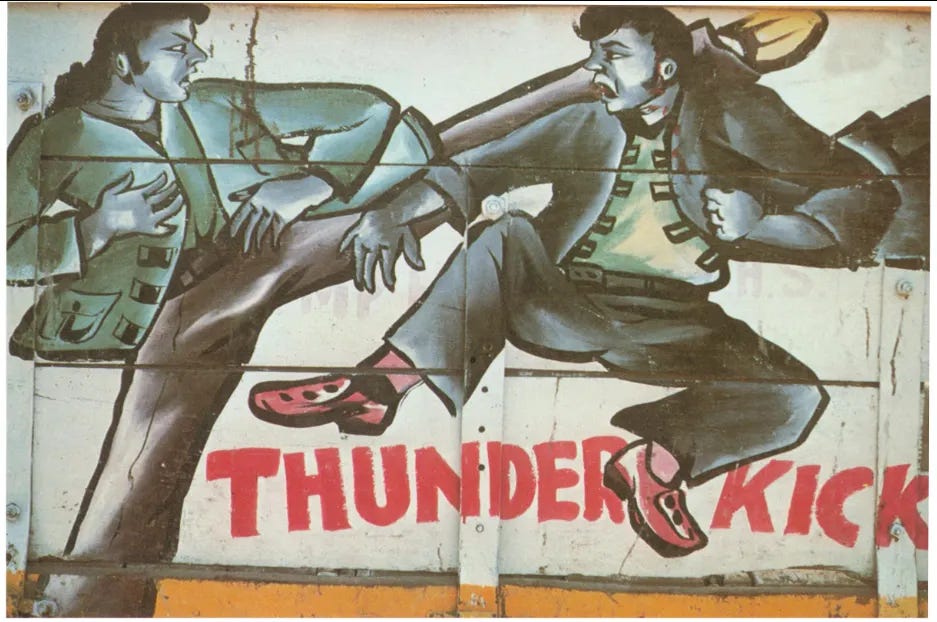
Jack Pritchett talks about the foreign influences of foreign movies: Chinese, English and American movies on Northern Nigerian trailers in the 70s with trailers sporting the James Bond 007 and scenes from Bruce Lee imitation films, serving as capsules of the predominant culture and commentary of the time.
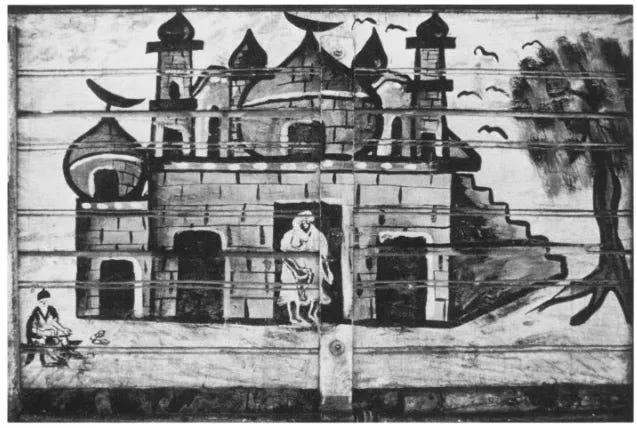
This era also witnessed significant shifts in religious imagery. Katrin Schulze and Jack Pritchett note the emergence of Middle Eastern styled mosques on the paintings at the back of lorries (Tailgate art), a move away from indigenous styled mosques to foreign expressions and an acceptance by Nigerians of membership in the international Muslim community. These forms of decor are also accompanied by religious paraphernalia such as rosaries or misbaha.
The Language of Expression: Thematic Deep-Dive
Route Information and Transportation Infrastructure
Today, decor communicates more than route information and transportation companies. However, within these specific categories it acts as repositories of the city’s changing sector. From the abolishment of Bolekajas, molues and sometimes okadas, expansion of Lagos road networks to the ever-changing restrictions by the government in Lagos transportation sector, the information and decor of commercial vehicles serve as transcripts of the schedules, laws and structures of the Lagos transportation system.
Religious Expression
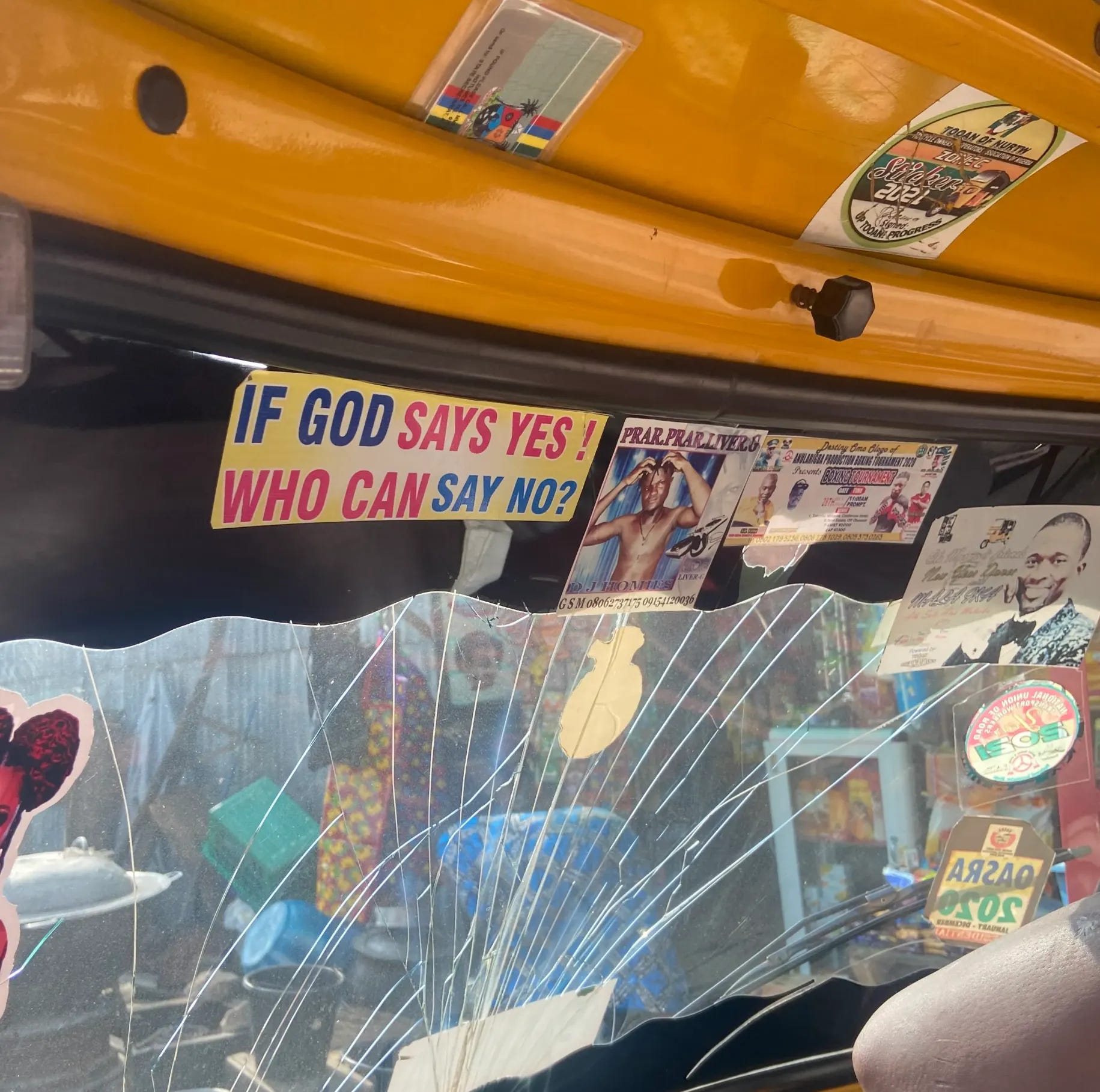
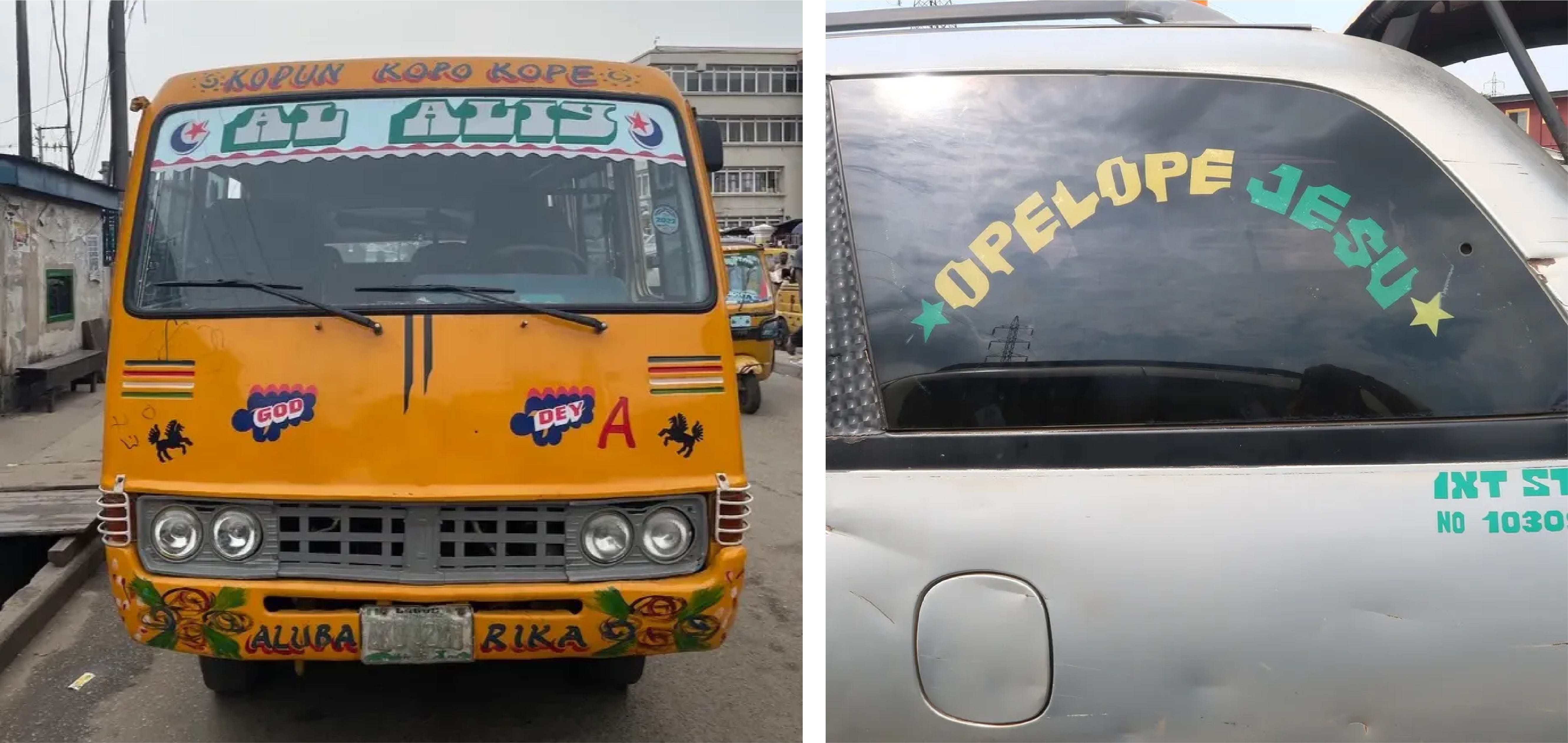
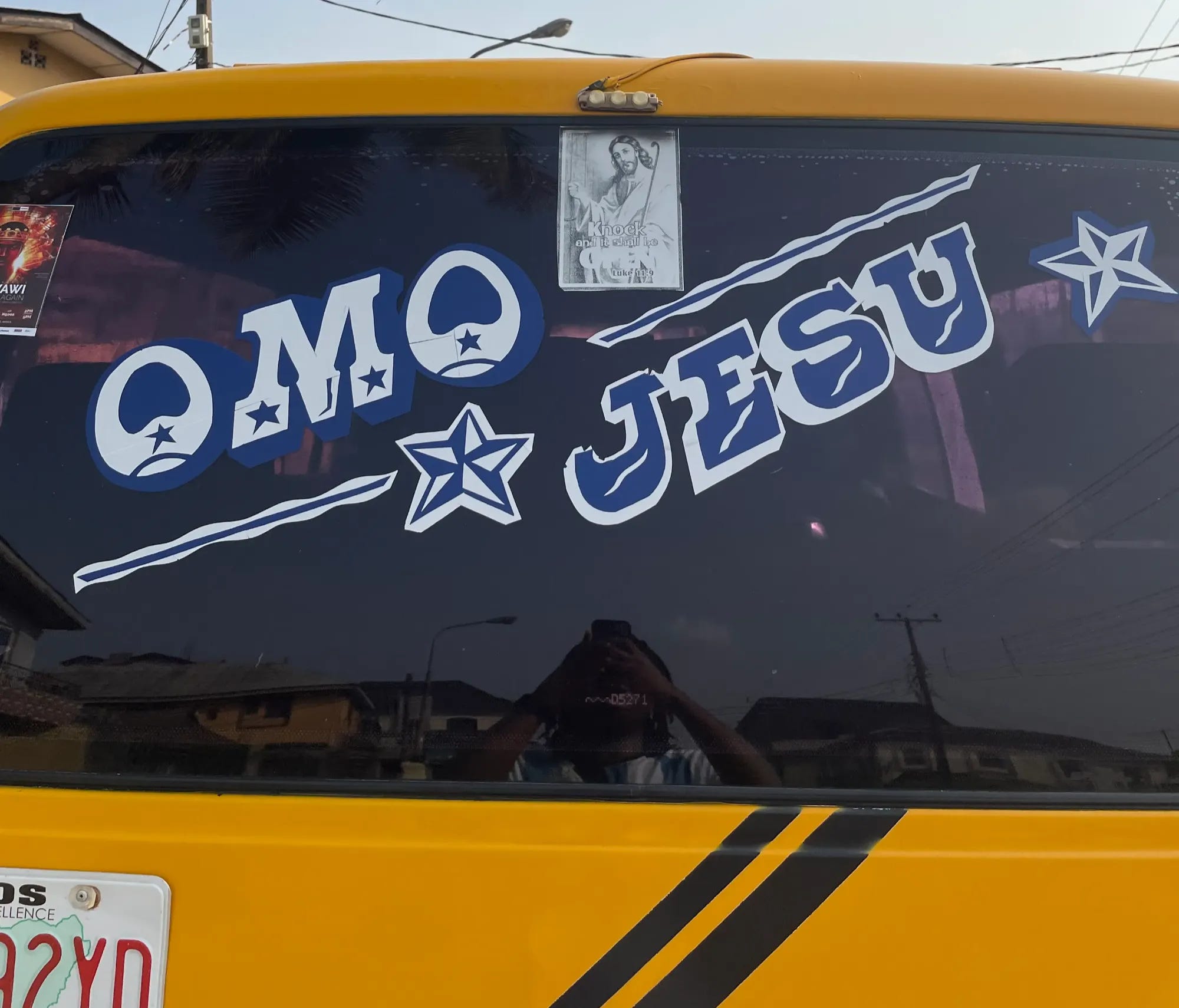
Reiterating the subject of religious content in transportation decor, it takes various forms. For proclamations, proverbs and sayings (text), artists commonly use paint for mudflap and body art (on larger vehicles) and vinyl stickers (on all vehicles) which are either pre-made advertisements from their religious institutions and shops or hand-cut stickers customised to fit the text requested by the driver. There also exists tailgate art which contains graphics (drawings) of religious scenes and emblems.
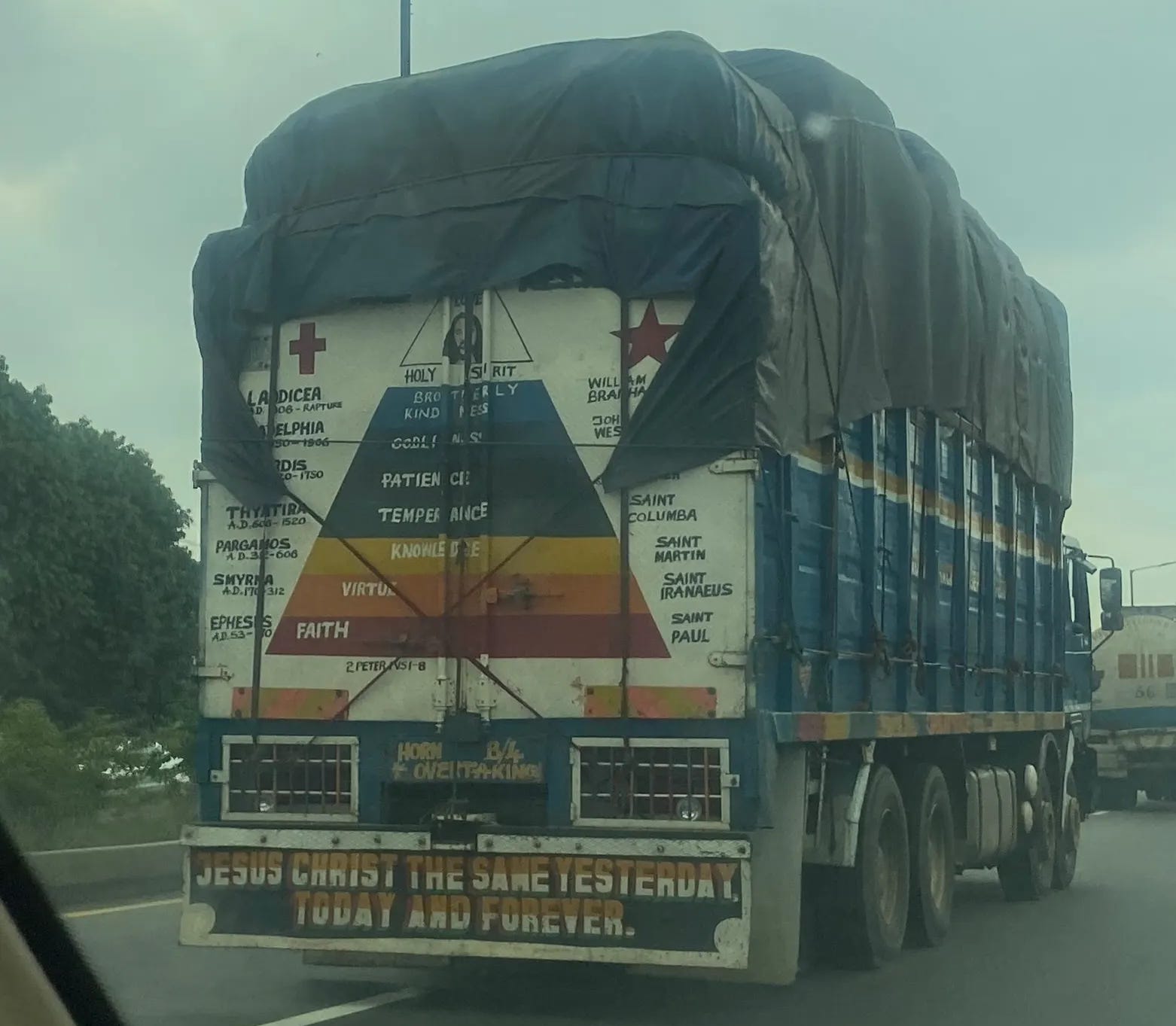
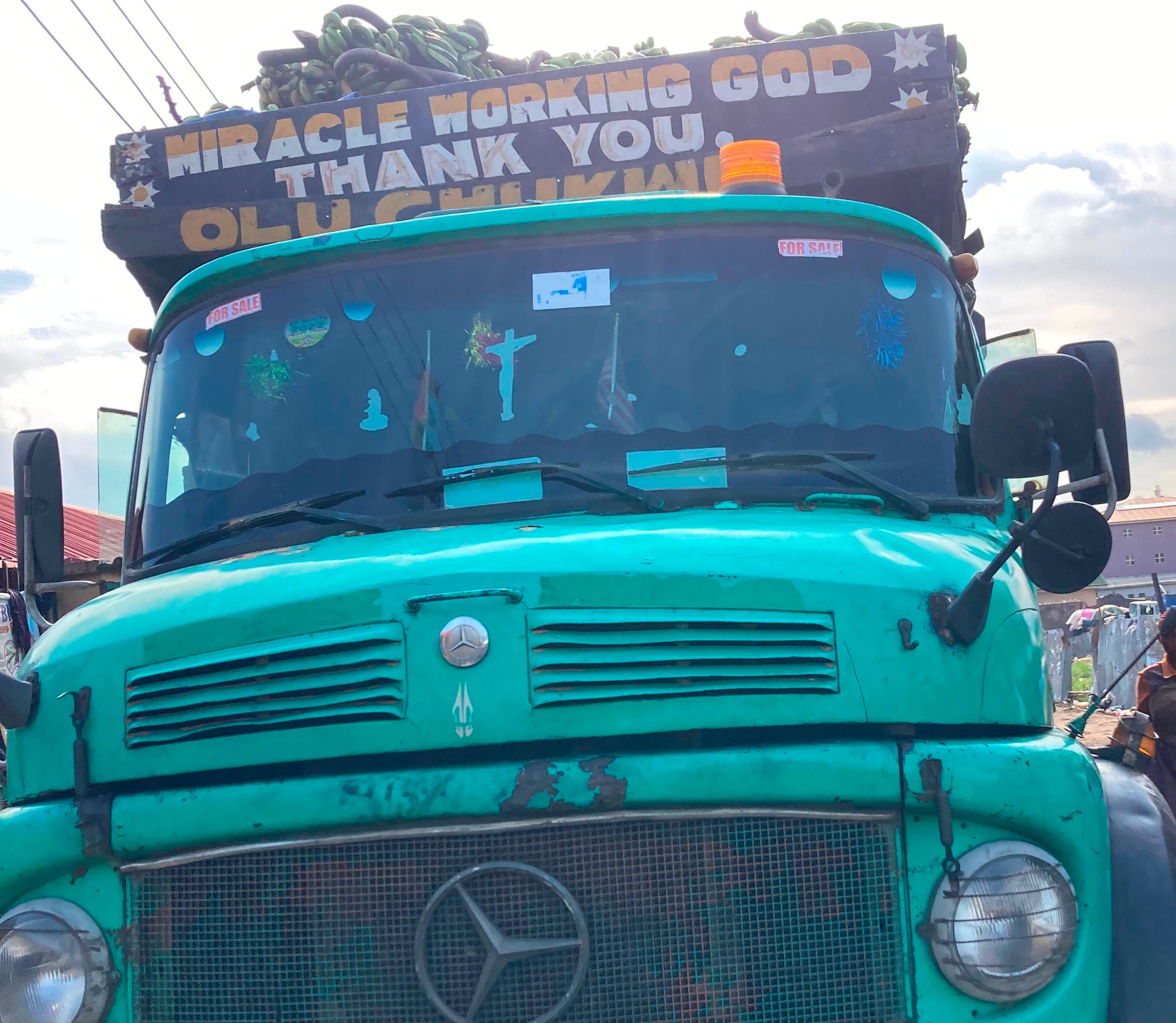
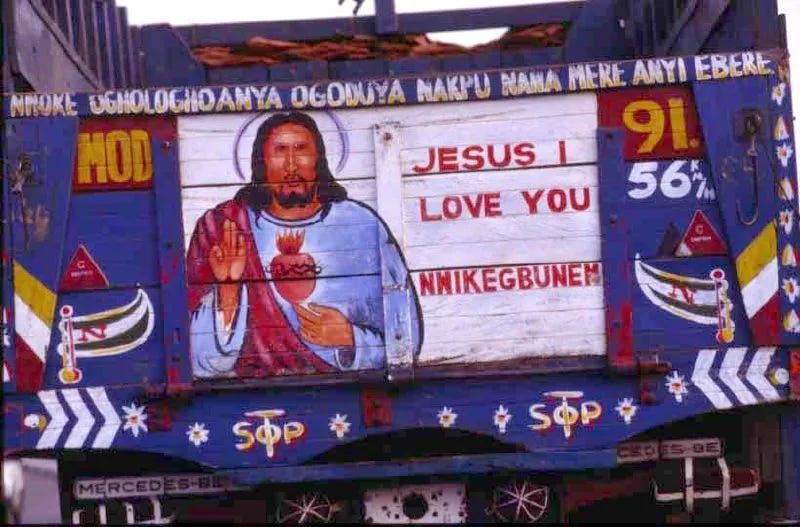
These religious scenes, which may be unassuming, have also served as archives of religious trends in Nigeria. The shift in mosque imagery documented by Schulze and Pritchett demonstrates how transportation decor captures not just what people believe, but how those beliefs are influenced by and integrated with global religious movements. Religious themed decor generally points to themes of safety and protection, believed by drivers as fortifications for their journeys on the road. From research, throughout the period of transportation decor’s existence in Nigeria, the notions and promotions of religious beliefs have stayed the same. However, the process has changed especially as it pertains to materials and artistic processes, pointing to an evolution of sorts in the living archive that is transportation decor.

Personal Expression
Following religious proclamations are other texts which include proverbs, nicknames and sociocultural statements. These texts take on various forms such as vinyl stickers and hand-drawn paintings which have all been widely admired and referenced. Research validates these sayings as personal preferences of the drivers/owners looking to express themselves and communicate their feelings to society. The vehicle becomes an extension of the driver’s voice, broadcasting personality to thousands of daily passersby. In a society where many lack platforms for self-expression, the decorated bus offers democratic visibility, a chance to be seen, heard, and remembered.
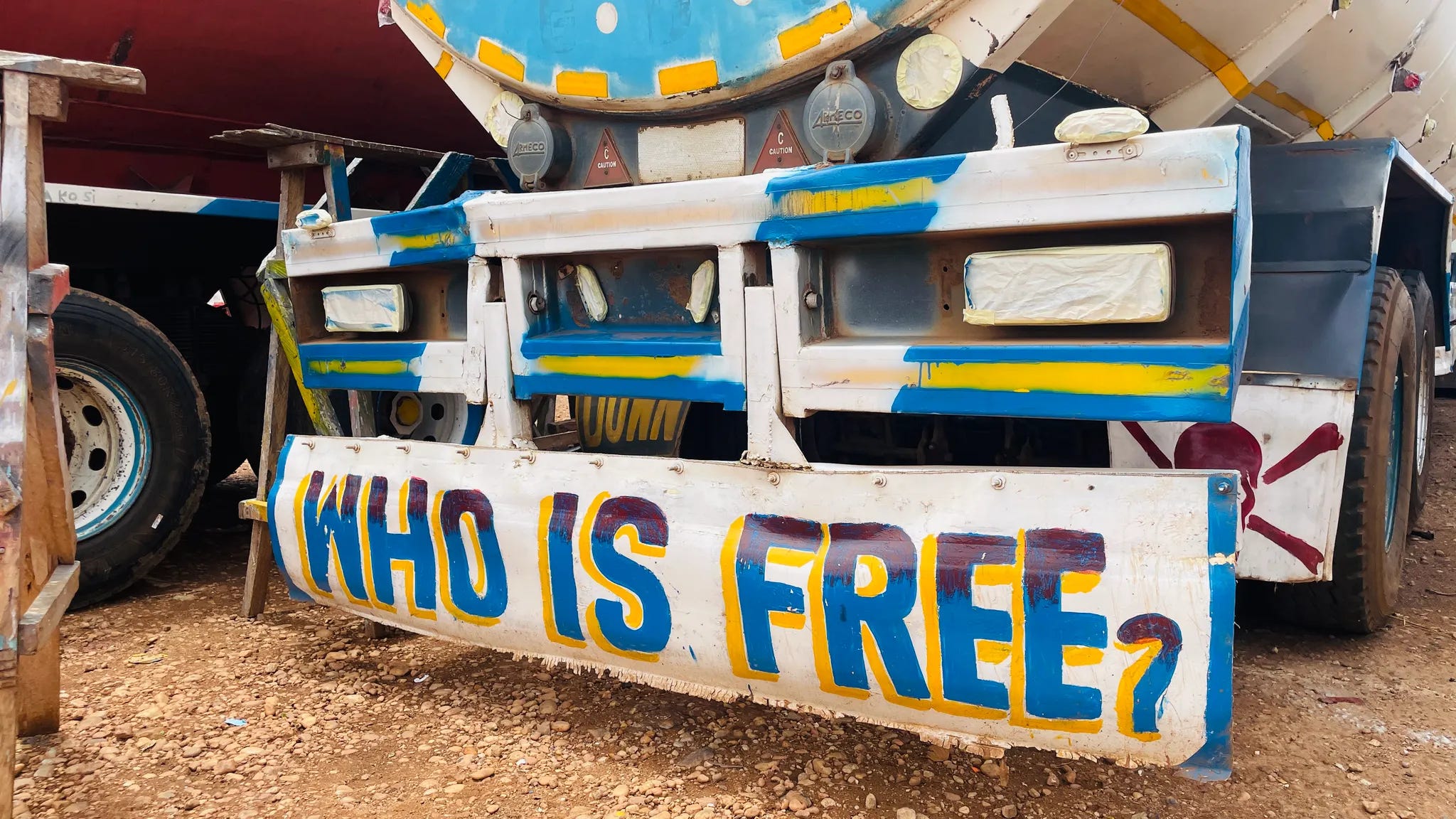
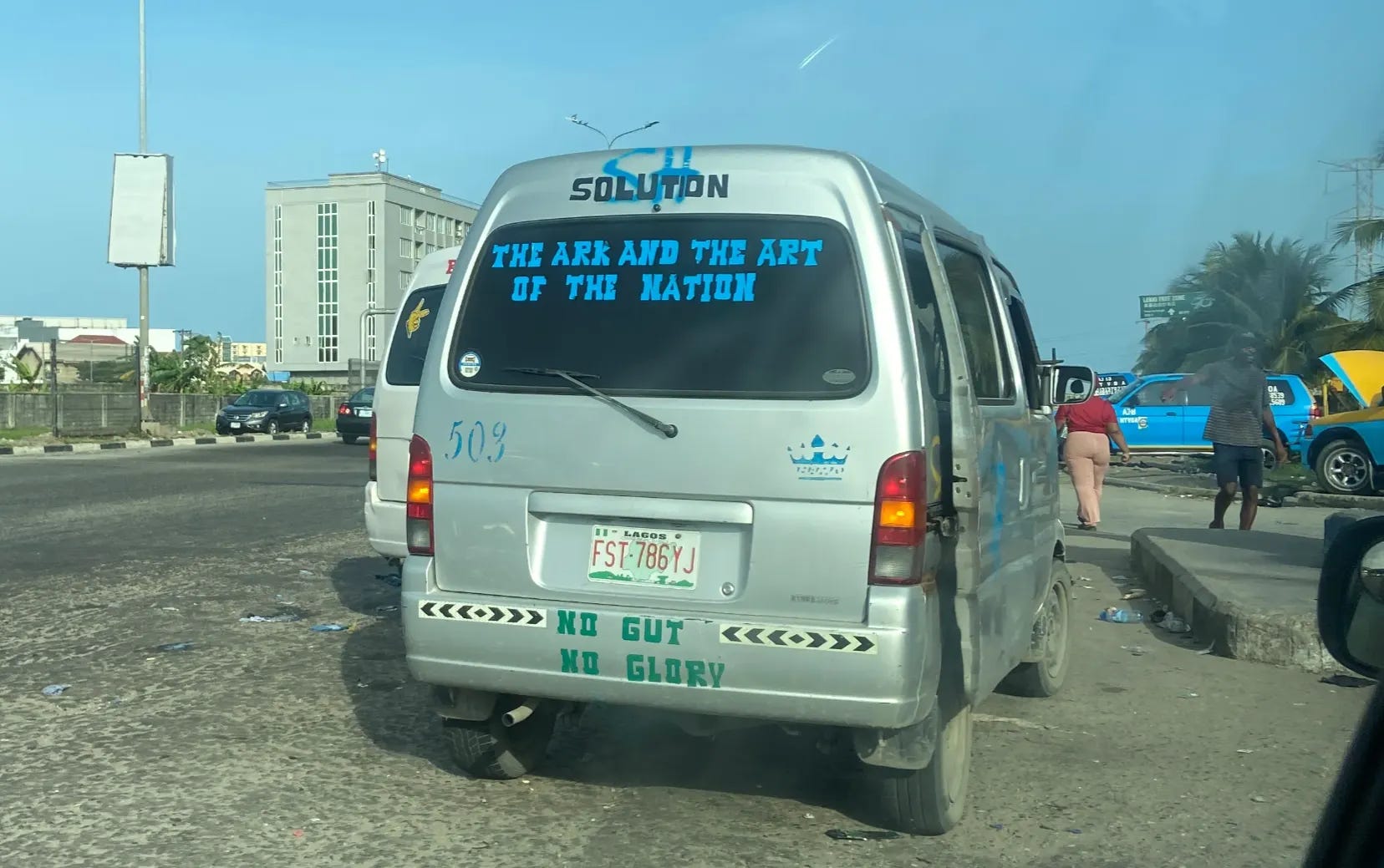
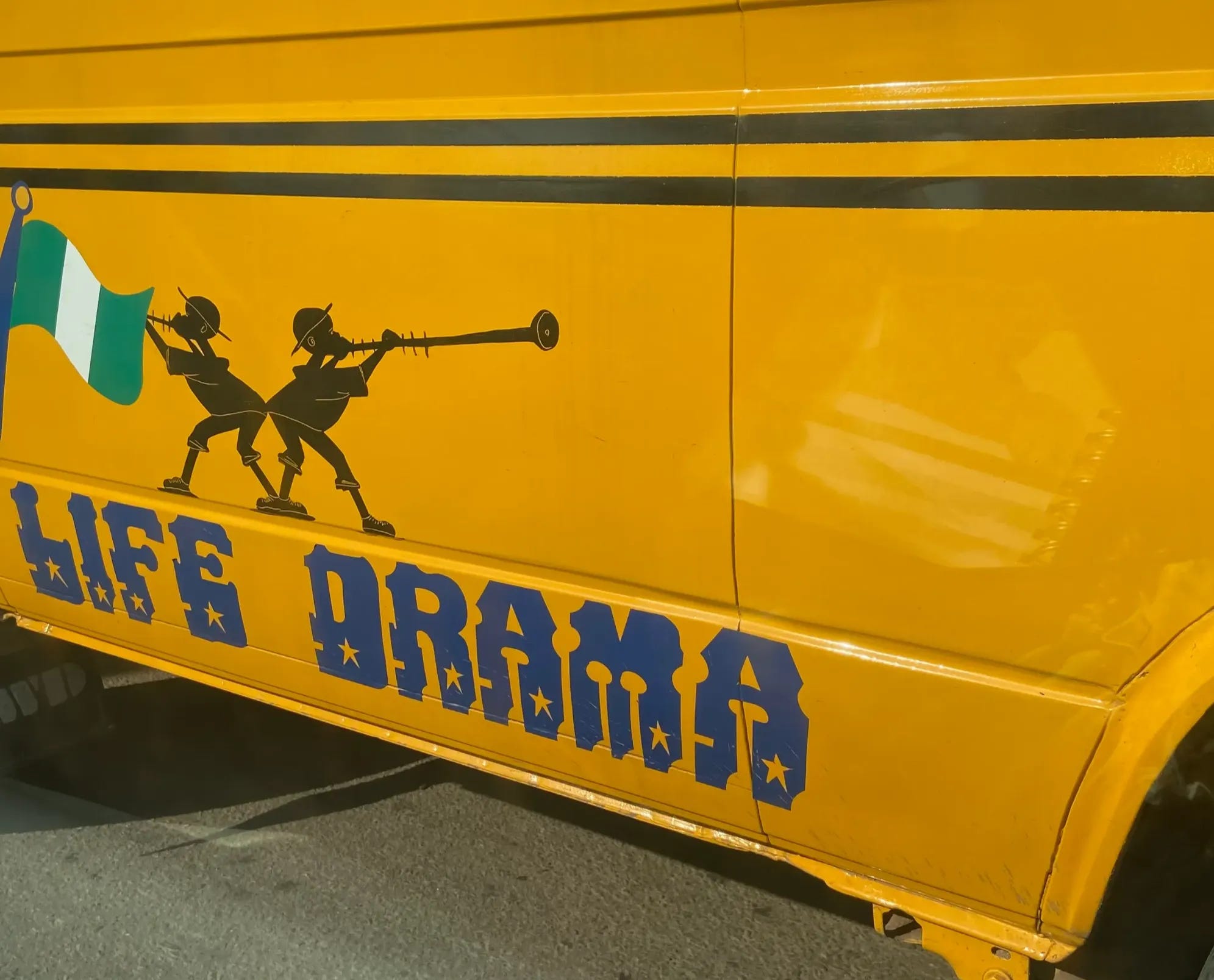
Commercial Intersection: The Advertising Invasion
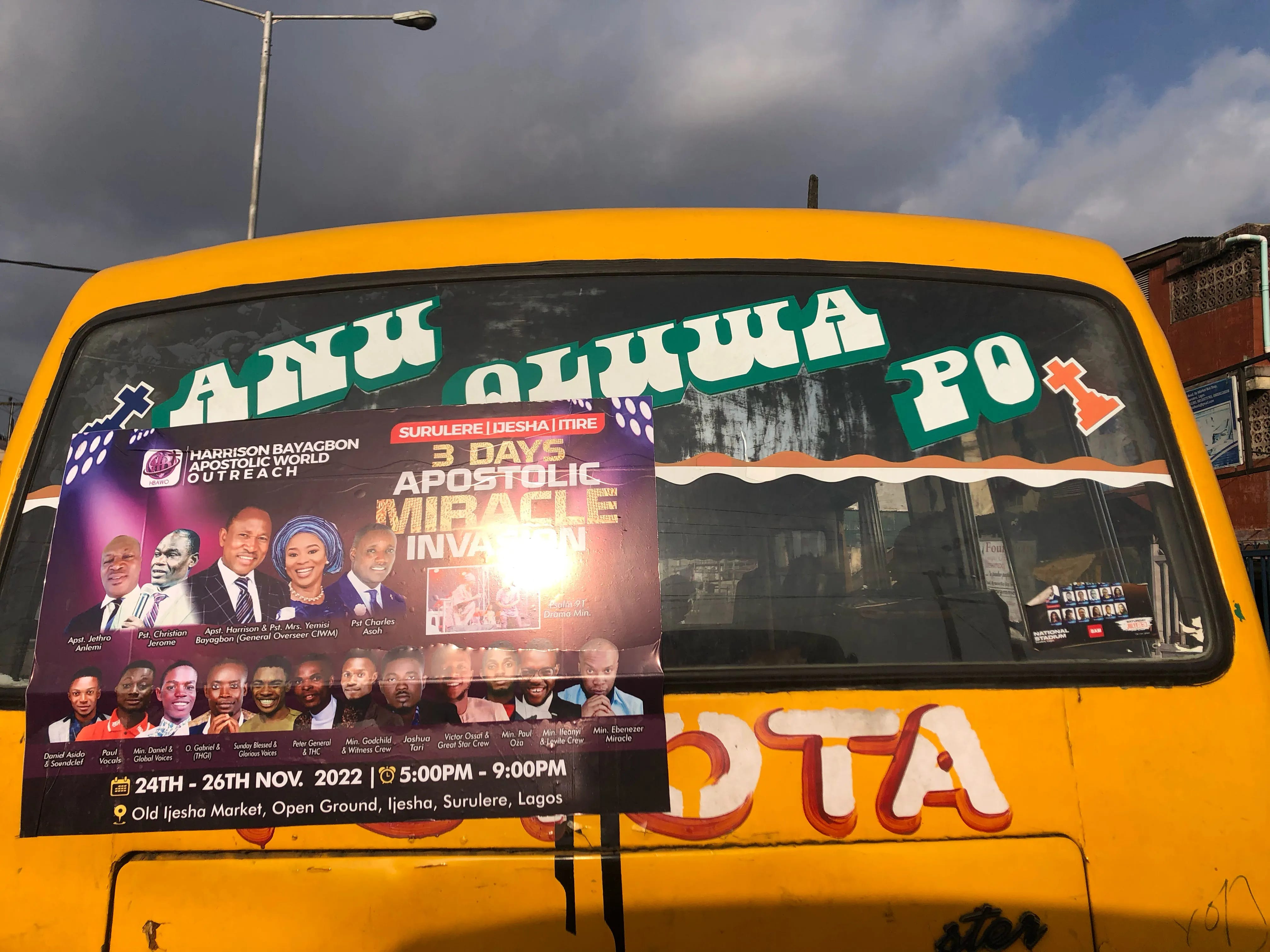
Advertising on commercial vehicles has noticeably increased across the years, particularly within the Lagos commercial transportation space. From church programmes, to products and services, the range of advertisement has been made easy due to the increasing accessibility of self-adhesive stickers and the growth of advertising industry in Nigeria. Brands often take to commercial transportation as forms of grassroots outdoor advertisement. Through the use of targeted campaigns across certain bus routes and transportation vicinities, brands, churches and organizations are able to increase awareness of products, events and more. This use case has inadvertently created a contribution to the history of events, products and services within the minds of people and the calendar archive of transportation decor. Especially given the frequency of change, by documenting a commercial vehicle at any given point in time one is able to reminisce on the products, services and events offered within that time range.
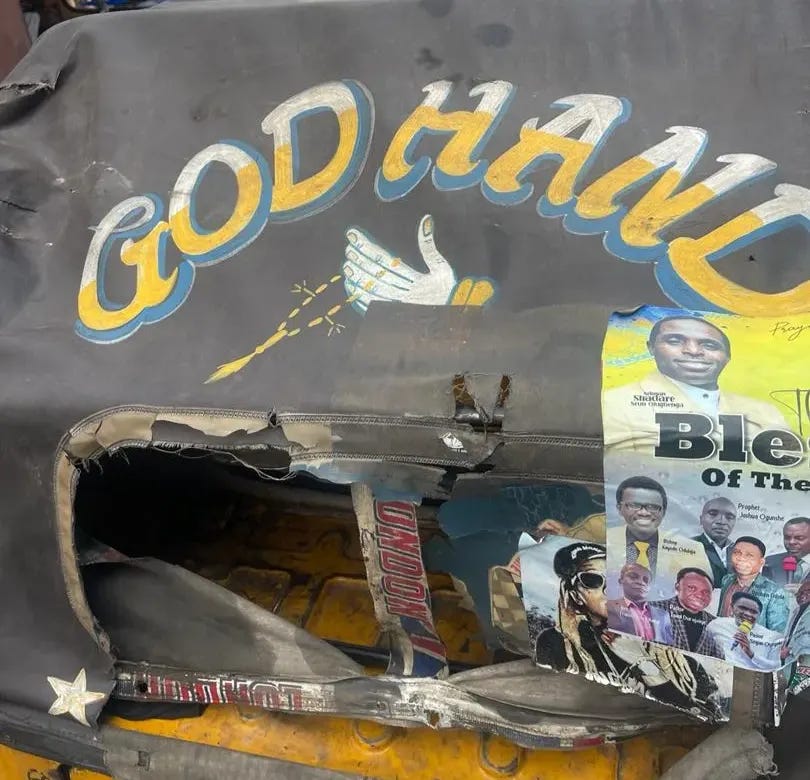
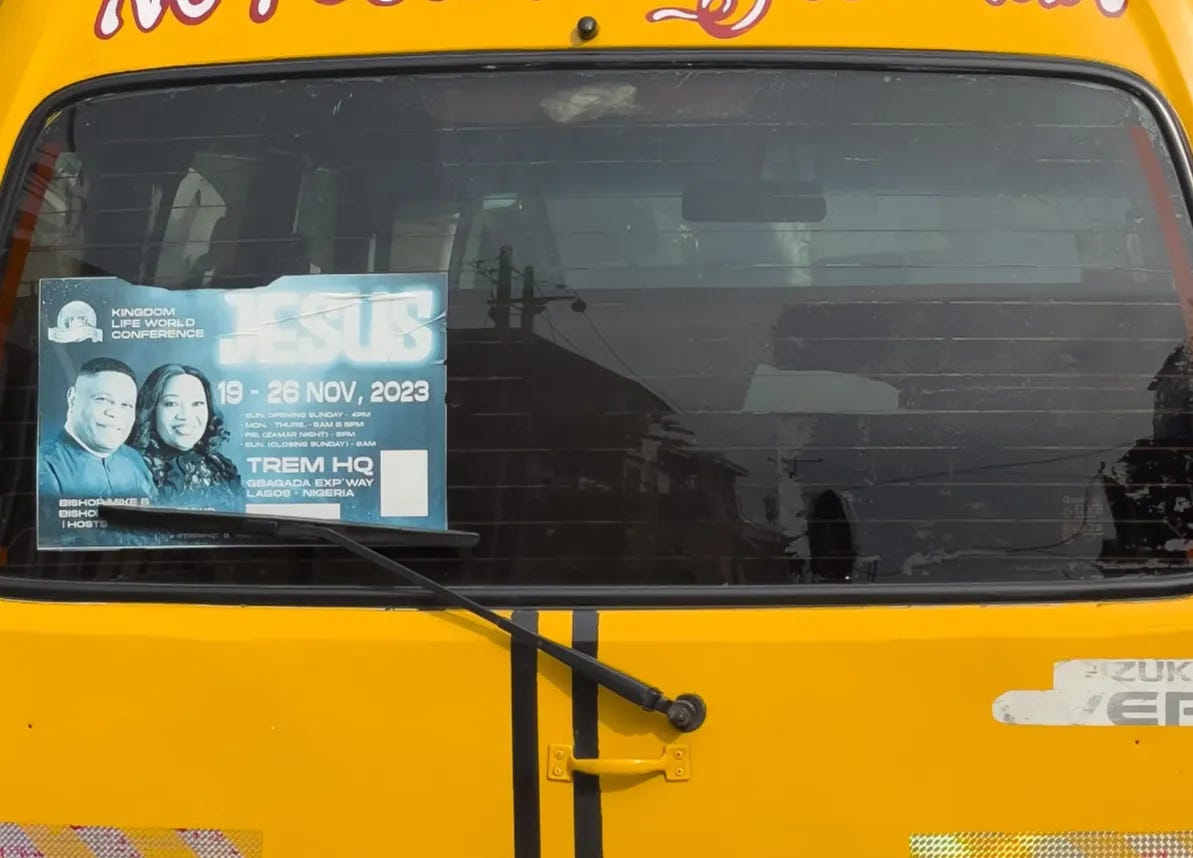
This form of advertisement often spills into the religious and political aspects of transportation decor. Although the use of advertisement on commercial transit is illegal without permission from LASAA according to the Lagos State Road Traffic Law 2012 42: “Except as may be prescribed by Motor Vehicle Administration Agency, Lagos State Signage and Advertisement Agency or any other agency of the State the use of marks, stickers, slogans, symbols, paintings, photos etc. on commercial vehicles is prohibited.” Enforcement however, is inconsistent as drivers often have their personal stickers (religious, social and cultural) and decor for which they are not fined.
Political Voice: From Campaigns to Protest
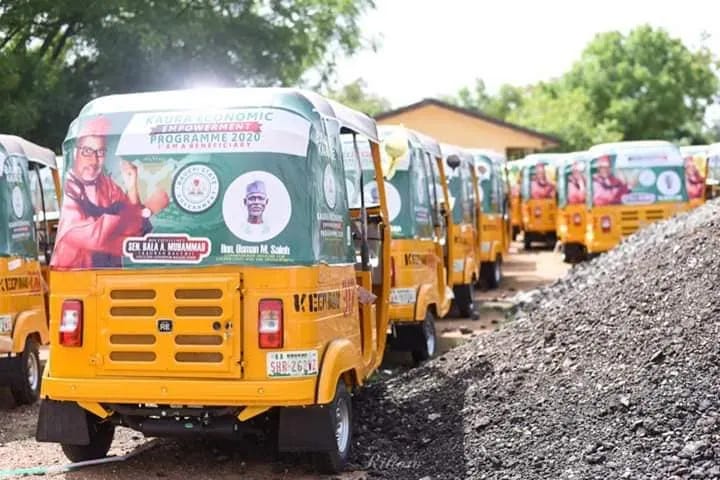
Politicians have employed bus advertisements for their political campaigns sporting portraits and promises of service to come. Similarly, bus drivers have come to use the medium to show political affiliations as a signal to their fellow drivers and the larger society, especially as witnessed during the 2023 Presidential elections. This is not without its hiccups as Lagos State Government has been accused of forcing drivers to sport their slogans and advertisements irrespective of political affiliations.
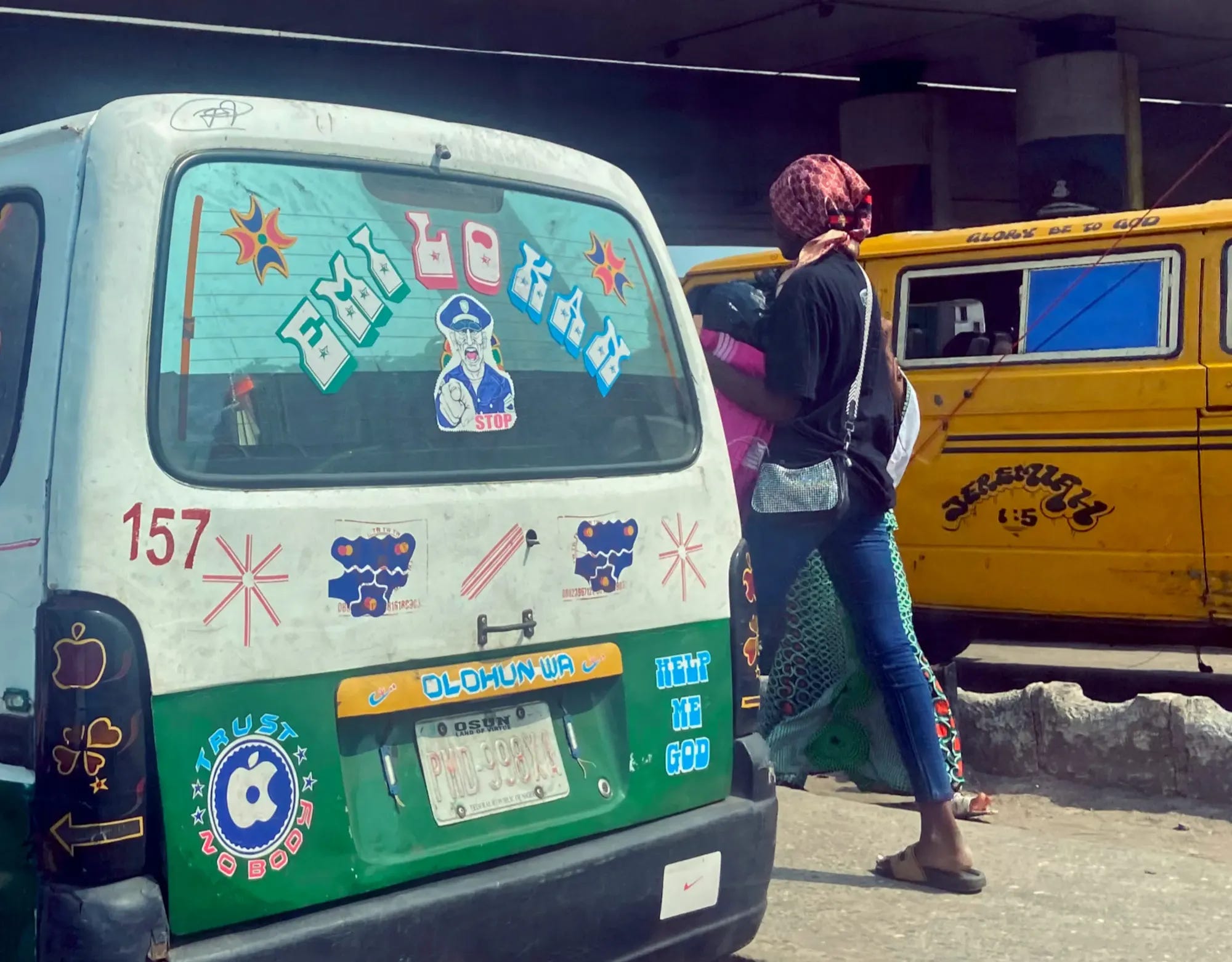
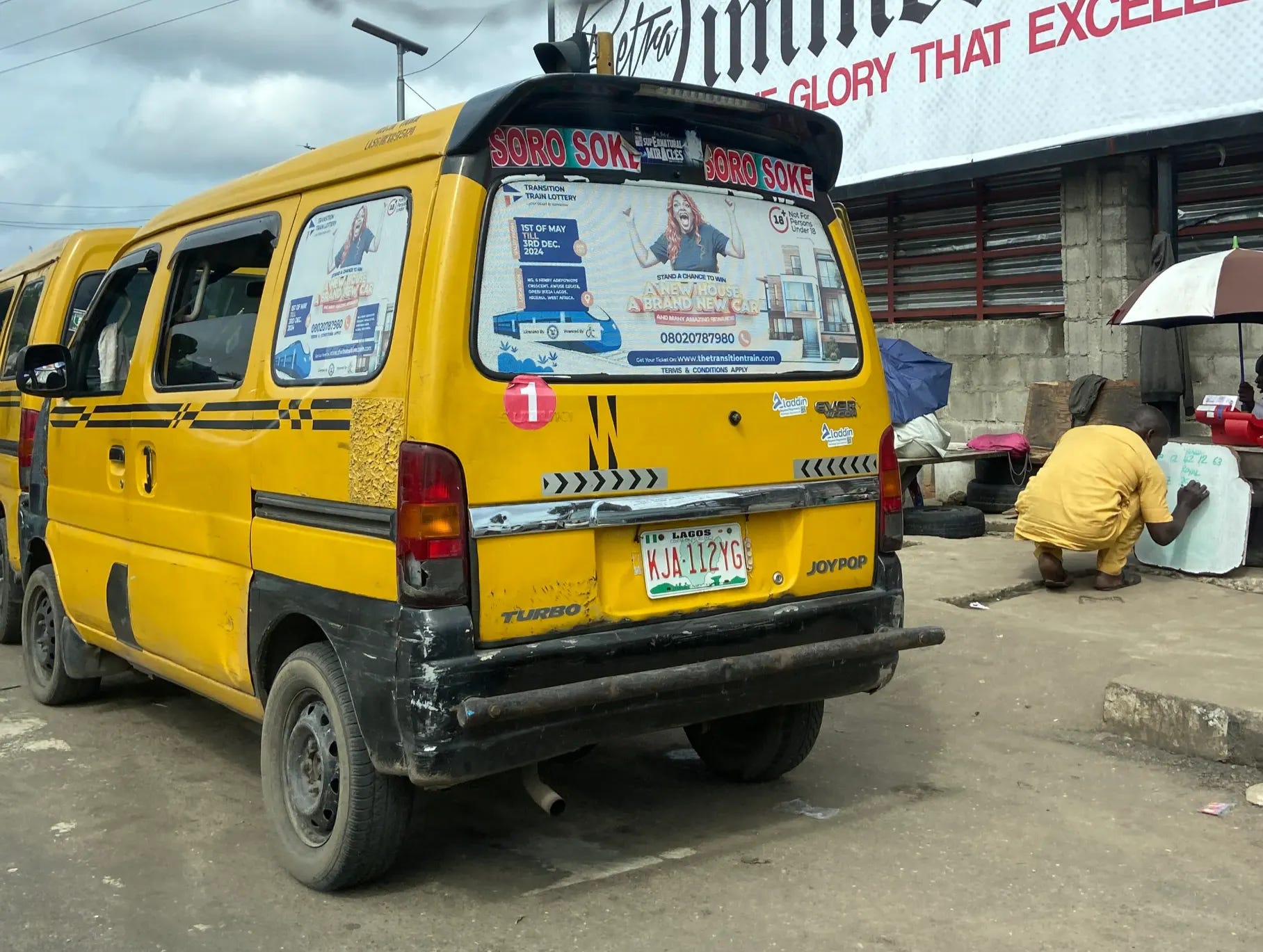
On the flipside, transportation decor has acted as a form of political protest as evidenced by the 2020 EndSARS movement. Bus drivers till date sport the slogan “Soro Soke”, an acknowledgement and declaration of their stances on government-backed harassment. Its lingering presence is a testament to the power of a united people and a record of political and social activity within the larger national context.
Pop Culture: Musical Timelines
Regarding popular culture, specifically music, transportation decor has acted as timelines of socially recognised artists. According to Mr Tejuosho of Jazzhole Lagos, drivers prior to the accessibility of vinyl stickers took to painted portraits of their favourite musicians as declarations of adoration, allegiance and community.
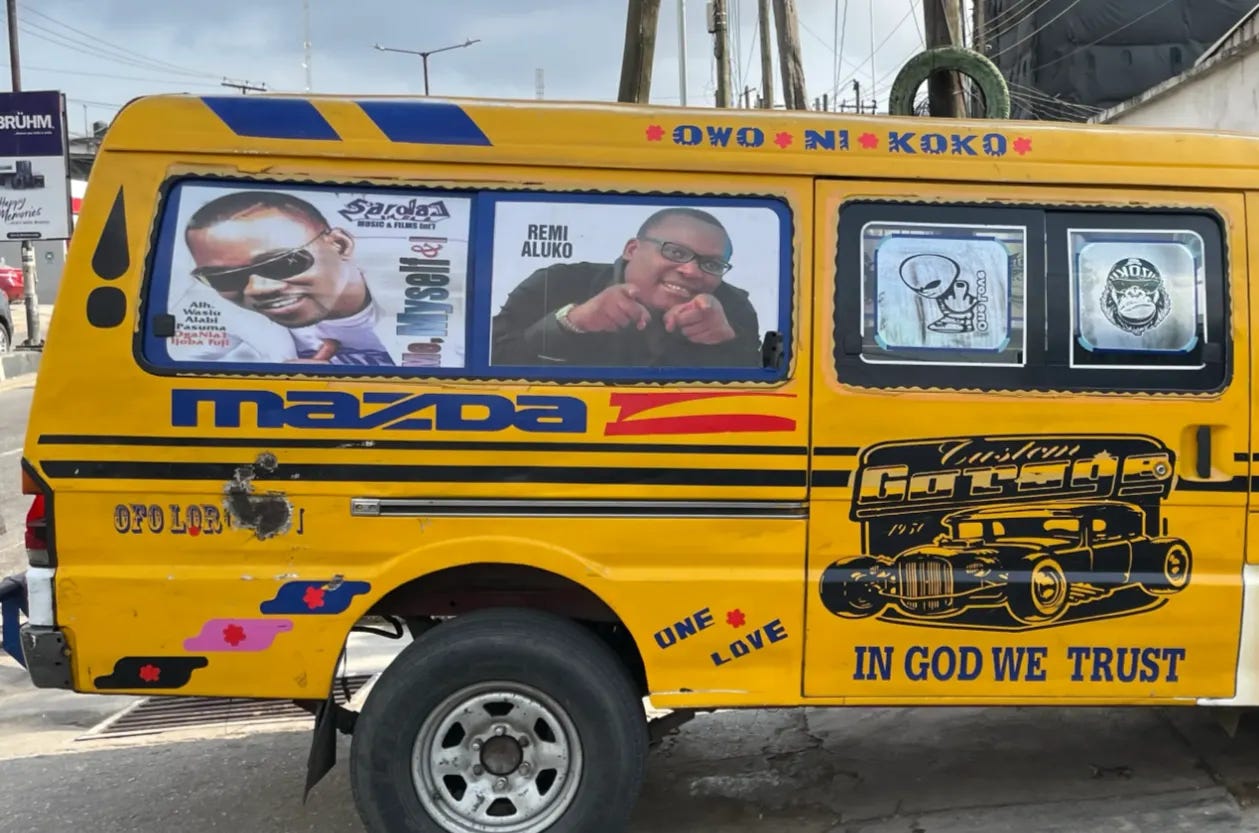
Today, on windshields and bodies of Danfos and other commercial vehicles are stickers of new age musicians such as Ruger, Seyi Vibez, Asake and more, reiterating the same notions of documenting and encapsulating the fashionable artists of the time, elevating community and adoration whilst capturing the spirit of musicians that speak to the essence of street music.
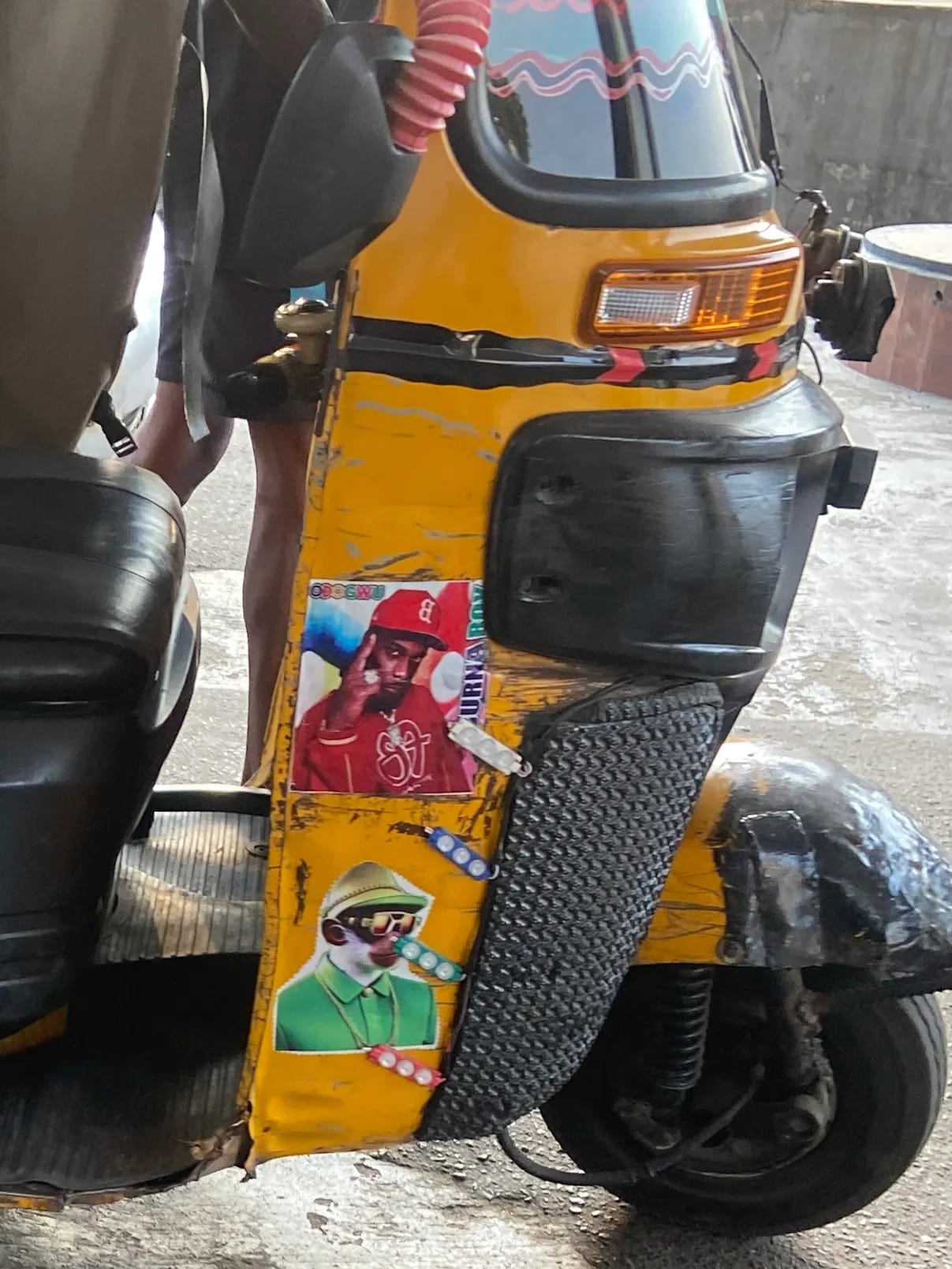
Ife adegbie 2025
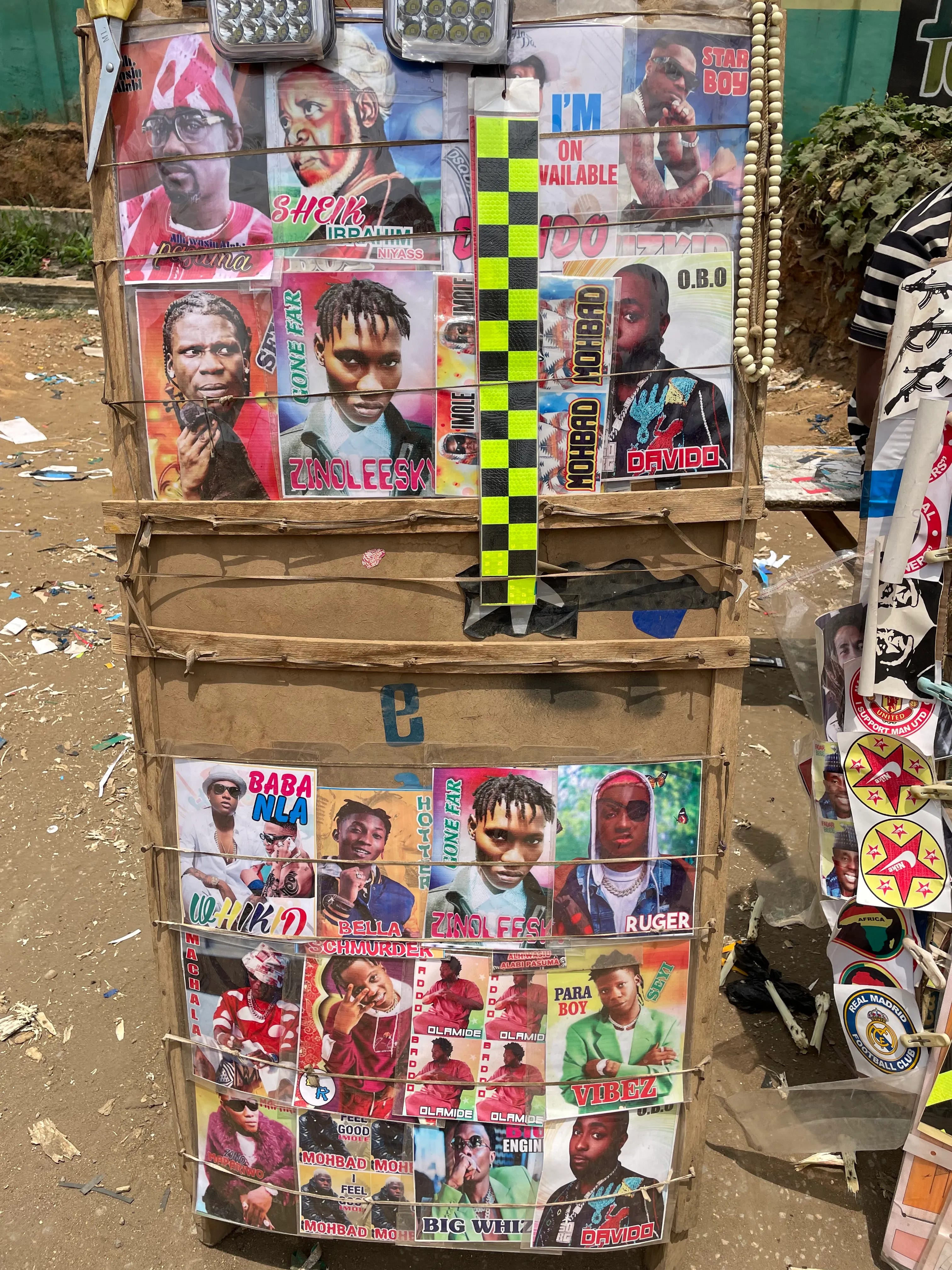
At the intersection of protest and music is the reaction as expressed through decor to the death of popular singer Mohbad. Bus drivers outfitted their vehicles with vinyl cutting of the artist’s moniker “Imole” along with self-adhesive picture stickers of the artist himself, displaying their support for him and protest at the unsavoury conditions surrounding his death. This performance of allegiance and support accurately captures the commentary on music and popular culture of the times.
Documenting Regulatory Change
Seen below is a snapshot of an okada with the Gokada logo on it, capturing the remnants of a fallen organisation whose demise was brought on by a single law.
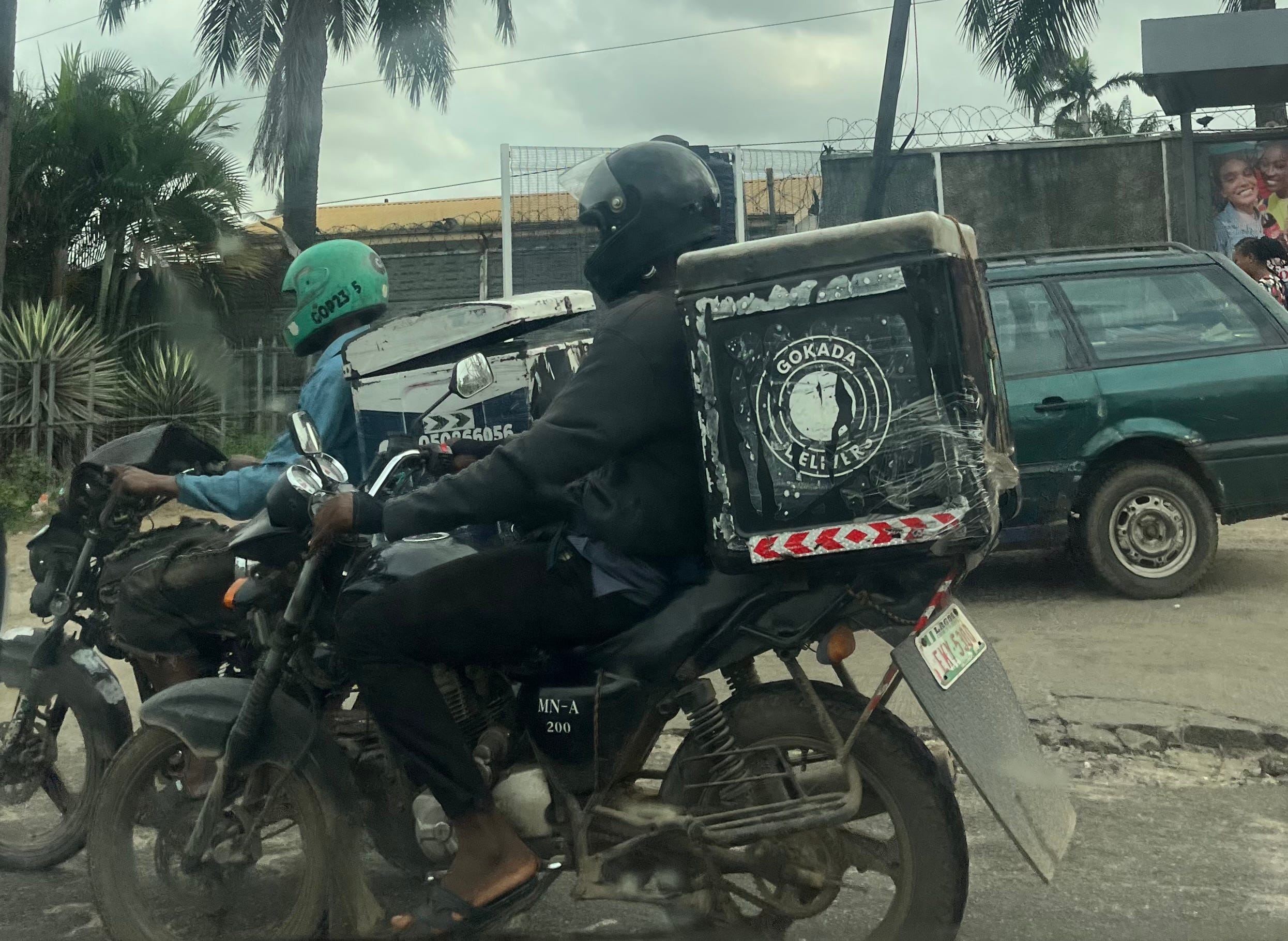
The above instances have highlighted the premise of commercial transportation as mobile bodies of meaning which embody the essence of urban life across Nigeria and their use cases as archives of thought, knowledge and culture. It also elevates the importance of images and visuals as arenas of thought that are not encumbered with the limitations of class, literacy and religion. Transportation decor represents more than aesthetic choice. It is democracy in motion. In a society where literacy, class, and access create barriers to participation in official discourse, these mobile canvases offer an unfiltered arena of public expression. Visual communication transcends literacy requirements, economic gatekeeping, and institutional control. Anyone can read a bus, regardless of education level. Everyone encounters these messages, regardless of social class.
The yellow bus spotting “Soro Soke” is a monument as significant as any statue. The okada bearing a defunct Gokada logo is a museum artefact in active use. The Danfo paying tributes to Mohbad is a memorial more visited than any physical shrine. Together, these vehicles constitute Nigeria’s most accessible, most honest archive, one that documents not the official version of events but the lived experience of urbanity itself. This archive captures what official histories often miss: the emotional temperature of moments, the cultural heroes of ordinary people, the spiritual anxieties that shape daily life, the political frustrations that simmer beneath official narratives. It preserves the interplay between global influences and local adaptation, between tradition and modernity, between institutional power and grassroots resistance.
James Yeku’s validation of print media’s contribution to Lagos visual culture applies equally to transportation decor. What some dismiss as “unsightly” defacement is actually sophisticated social documentation. What appears chaotic and unregulated is actually a complex system of meaning-making that serves crucial archival and communicative functions.
It is also a transcript of the enduring legacy of art history in Nigeria. This legacy has quickly evolved within the design space, informing and influencing popular design. Transportation decor continues evolving, absorbing new technologies, responding to current events, reflecting shifting cultural priorities. Sign artists, whether wielding traditional brushes or operating vinyl cutters, continue shaping visual culture for the masses. This is art history in motion, literally. Every bus that passes carries fragments of Nigeria’s story: religious evolution, political struggle, musical movements, personal dreams, regulatory changes, technological transitions. These are not static artefacts preserved behind museum glass but living documents in constant circulation, accumulating new layers whilst older ones fade, creating palimpsests of urban experience.
As Lagos continues its rapid transformation, as Nigeria navigates complex political and social challenges, transportation decor will continue documenting these changes in real-time. Future researchers will look to these mobile archives to understand our era, not through official pronouncements or sanitised histories, but through the unfiltered voices of those who navigate the city’s streets daily, who know its rhythms intimately, who express its truths boldly on their vehicles. The buses will keep rolling. The signs will keep changing. The archive will keep growing. And in that perpetual motion lies the essence of urban life itself: constant, contradictory, resilient, expressive, and profoundly human.
References
Agbiboa, Daniel E. “Mobile Bodies of Meaning: City Life and the Horizons of Possibility.” The Journal of Modern African Studies, vol. 55, no. 3, 2017, pp. 371-93. JSTOR, https://www.jstor.org/stable/26846979. Accessed 1 Nov. 2025.
Schulze Katrin . “Mosques, Palm Trees and Swords: Religious Symbolism in Northern Nigerian Lorry Decorations”
Pritchett, Jack. “Nigerian Truck Art.” African Arts, vol. 12, no. 2, 1979, pp. 27-31. JSTOR, https://doi.org/10.2307/3335480. Accessed 7 Nov. 2025.
Yeku, James. “Nollywood film posters and print urbanism in Lagos.” The Routledge Companion to Media and the City, edited by Erica Stein, Germaine R. Halegoua, and Brendan Kredell, Routledge, 2022
 The Commuters Canvas
Leave a comment