Commonly referred to as ‘popular African painting’, this style reflects the body of work carried out by ‘the first generation of commercial Nigerian artists’ (Beier 1976). These are artists with little to zero formal art education serving the populace of new urban areas across the continent. Their work includes but is not limited to murals, transportation decor, book covers and pamphlet literature . The timeline for the emergence of these artists, 40’s to 70’s, is linked with the establishment of urban areas in colonial Africa, the interconnected class mobility of Africans during this period and in certain cases the independence of these countries.
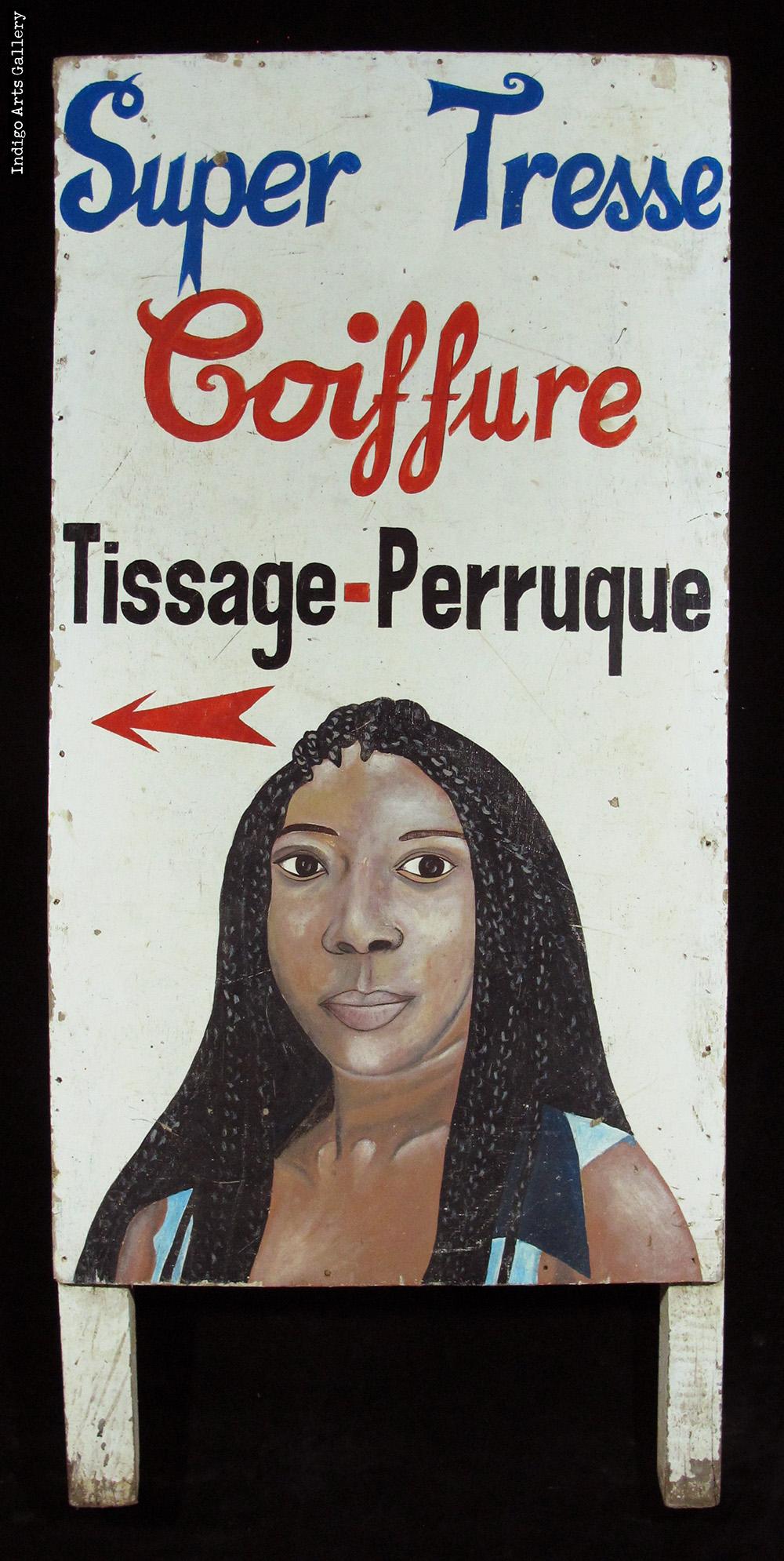
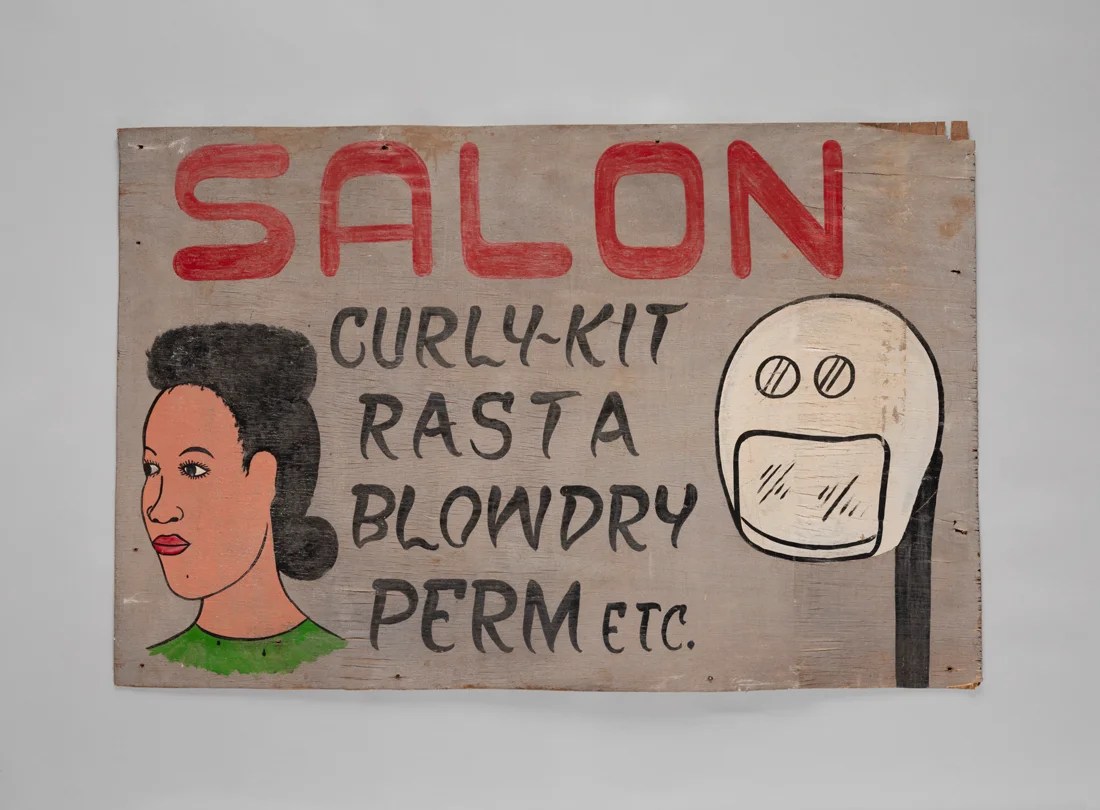
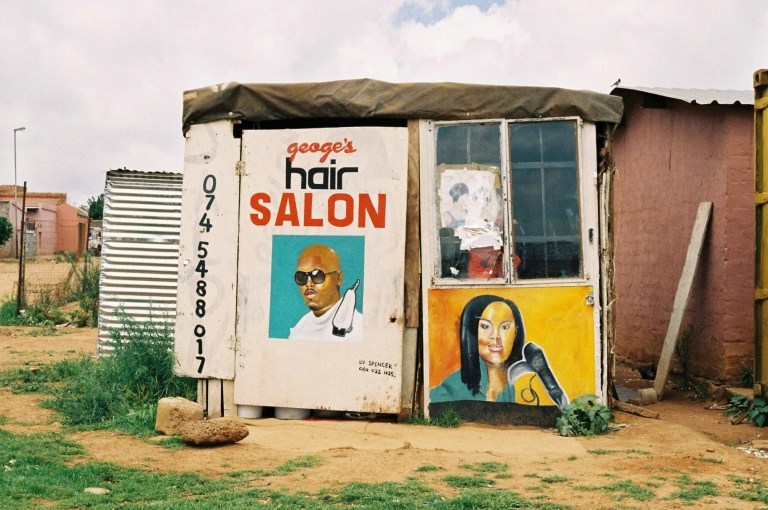
Across the continent these artists have been studied in relation to specific clientele e.g. barbershop art, but never as a complete body of work especially as it pertains to artistic style. Informally trained, these artists moved to newly sprawling urban areas to serve the burgeoning middle class that was characteristic of the colonialism, independence and urbanization era of the continent. Most countries at this time had blue collar workers, political activists and civil workers all of which were politically engaged with the fight for sovereignty along the mass urbanization characteristic of the world Post World War II (Mariaclaudia 2014). They were often bright eyed young men looking to partake in the glamour of the new urban life by deviating from traditional African art subject and process. ‘Beautiful women, glamor, romantic love (Hollywood version), elegant Western clothes, fancy hairstyle – were some of the major themes (Beier 1971) in their work. The content of their artworks were rather didactic according to Cheri Samba, a popular Congolese artist ‘ the messages and the stories told by these artworks are literal, giving to the viewers little or no chance for misinterpretation’. They often depicted scenes found in everyday life such as romance, family, morality, religion , politics and social commentary in both commercial and personal art pieces. Their admiration for urban life was seen in both personal and commercial work. As they were primarily commercial artists a lot of their work ended up being commissions for clients leaving little to no personal work.
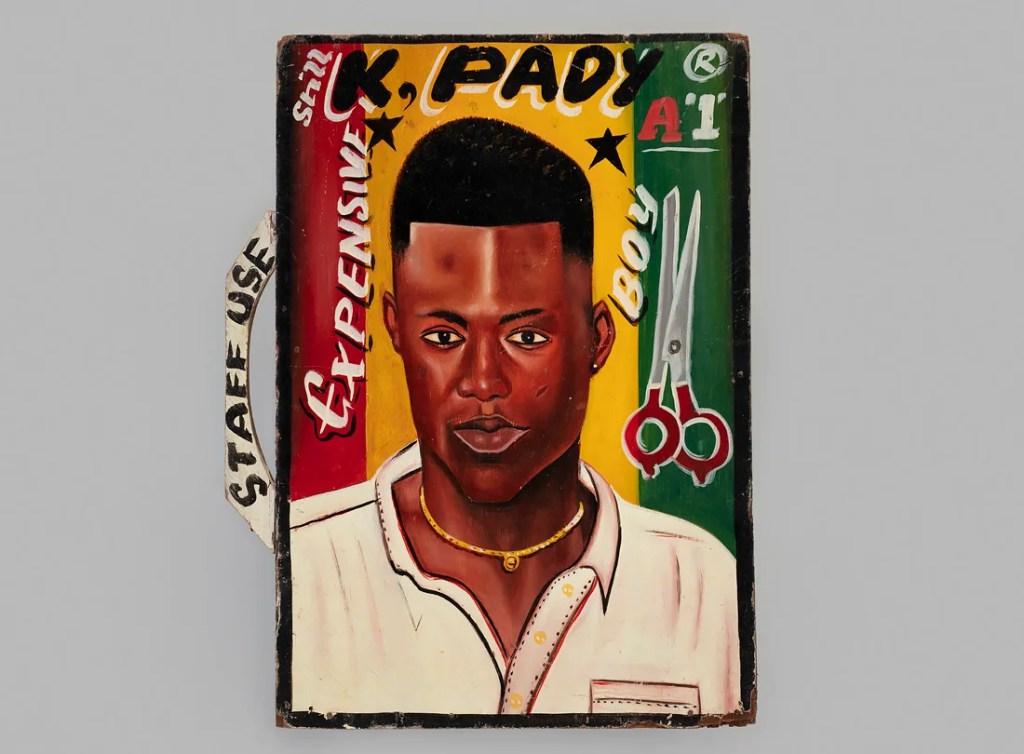
Their place in the wider art conversation across the continent is complicated. Described as the first generation of commercial artists in the continent by Ulli Beier(1964), they have only been recognized for their contributions to barbershop, lorry art, voodoo art and in rare cases mural art. Their prevalence coincides with Nigerian contemporary artists like Ben Enwonwu and Uche Okeke and African artists like Cheri Samba however they lack the same recognition. Described as ‘urban’ art, their work deviated from traditional african art but lacked the accompanying intellectualism found in their colleagues. Although numerous books(visual and research), indicating commercial value, have been written on barbershop art, their contribution to the continent’s larger art market has not been measured. The informal nature of their work and lack of governing agencies may be contributing factors to their absence in western collections. However, these factors are not limited to the work of sign artists in the larger African art conversation.
A forgotten people, these artists have come to define the most popular art style on the continent. Although operating across different mediums, the artistic style of sign artists across the continent is eerily similar showing parallels in their origin and influences. Often working on wood panels, their lines are sharp and clear with bright colors, narrative structure (Beier 1971) of comic books and layouts mimicking that of advertisements. Inspired by European advertisements, foreign cinema, photography, comic strips, poster painting and religious materials (Gilbert 1999) their style possesses a unique approach to shading, line and composition like that of surrealism. Motivated by daily life, artists like Cheri Samba from the Zaire (now Democratic Republic of Congo) made the school of popular painting, Middle art covered the effects of the Biafran war in Nigeria and wayside artists in Ghana shaped Ghana’s visual and cultural landscape (Mariaclaudia 2014) among other similar scenarios across the continent. Due to the lack of personal work their style has been narrowed down to barbershop art, given they were their most visible clients, however their style is encompassing and is still evident in modern graphic design. In cases like Cheri Samba and Onitsha signage artists, their work translated to full time roles as illustrators and designers at advertising agencies (Cristofano 2014).
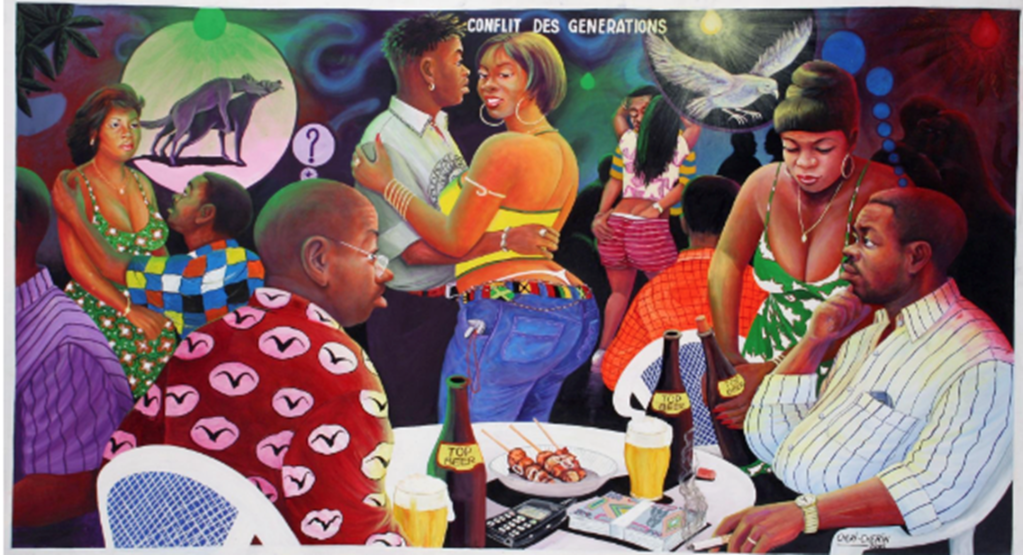
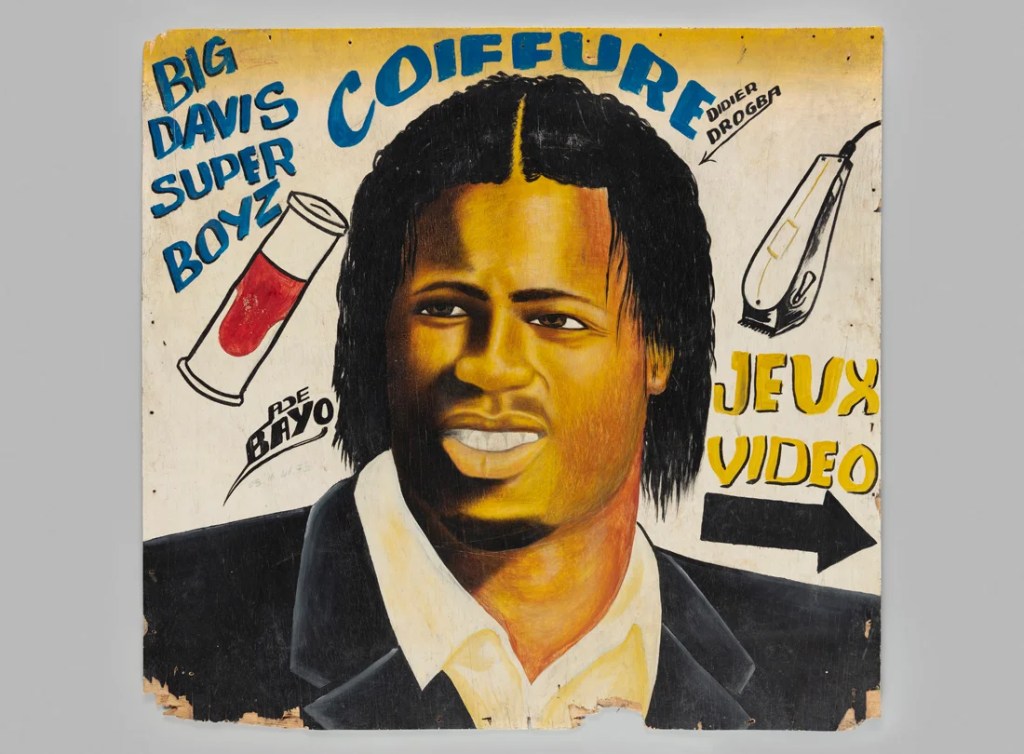
Their parallels to graphic designers and natural transformation to modern day print shops cannot be understated. Often starting out as figurative artists, Signage artists define branding and covers for various clientele. They are responsible for handling the visual advertisement needs of their clients . Earliest mentions of sign artists in Ghana emphasize their active immersion in the advertisement industry. Their tasks include but are not limited to creation of fonts, book cover art, logo design, billboard advertisements and flyers. Research has shown that the range of the work done by sign artists varies on the advancement of their urban areas. Talking with sign artist Samuel in Lagos Nigeria, a good number of printing shops initially started at the helm of figurative and signage artists. Although they still create branding for buses, businesses and people, their methods are more modern or at least incorporate modern techniques, often starting their own businesses after the completion of their apprenticeship.
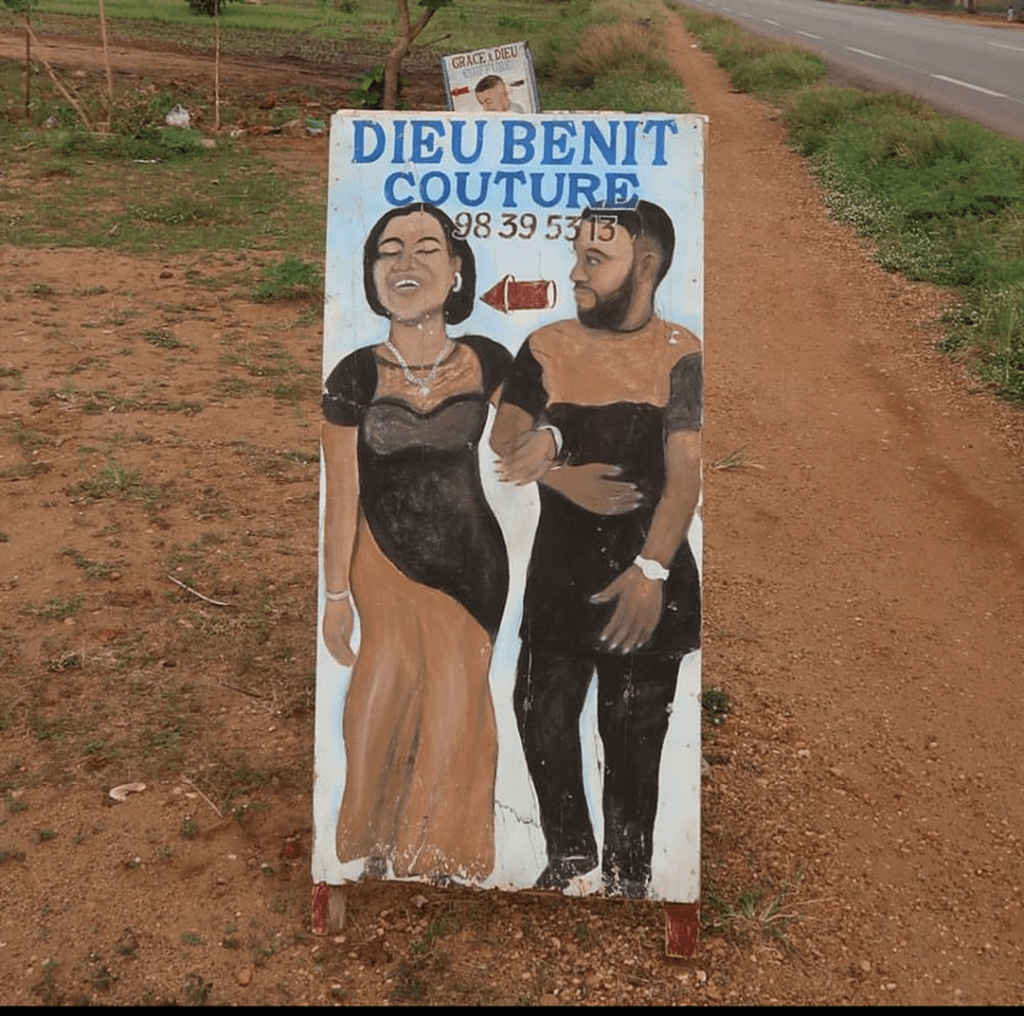
Across the continent their title as sign artist varies; roadside artist in Nigeria, wayside artists in Ghana, sign artist in senegal.
The range of sign artists within the Nigerian context can be narrowed down to transportation decor, murals, religious material and book covers and pamphlets.
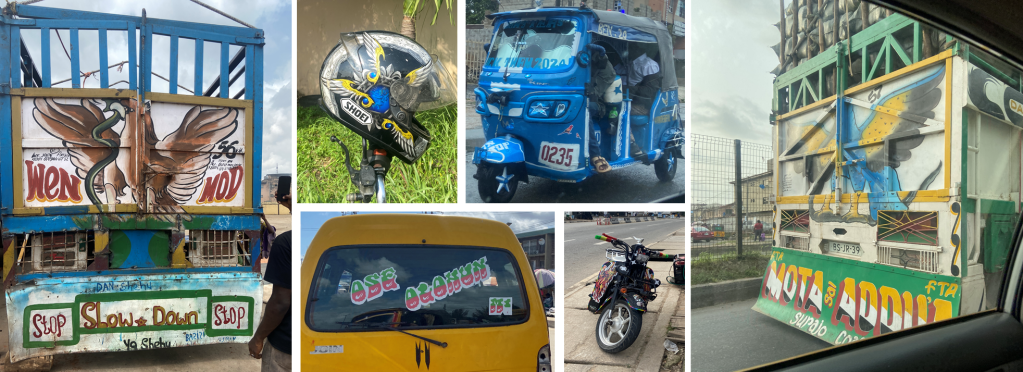
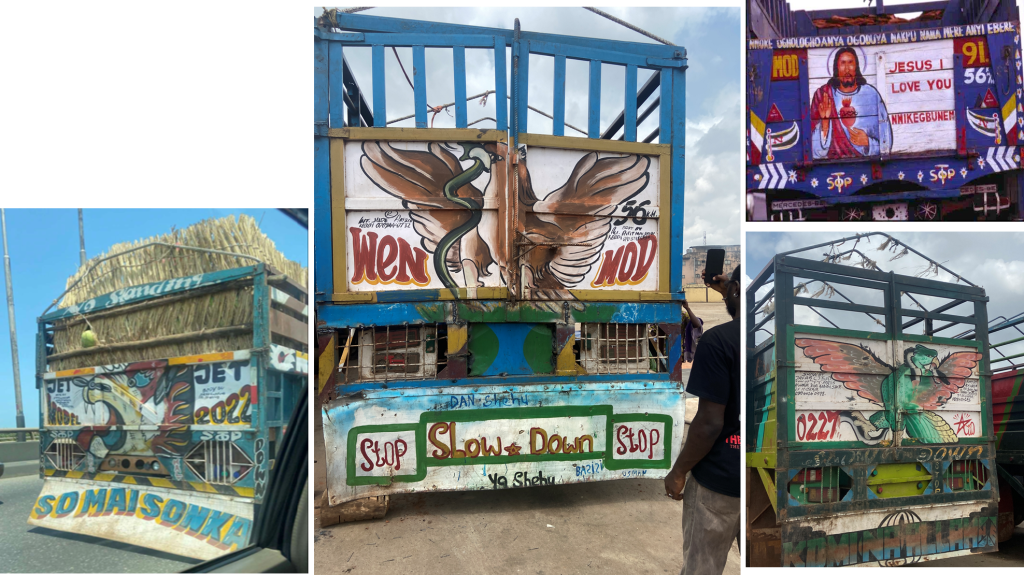
Transportation décor as a medium is expansive due to the varied modes of transportation and their corresponding histories and relationships with sign artists. The art stylization of various transportation decor is also determined by the routes and purposes which they serve. Larger lorries carrying live and food stock typically come from Northern Nigeria (food belt of the nation) and their art content is largely influenced by Islam and other sociocultural factors unique to Northern Nigeria. Tailgate art is the largest section of transportation décor behind typography, slogans and vinyl composition. Tailgate art like other aspects of transportation art is a feature of economic changes. As noted by Tam Fiofiri, the change in structure of lorries (introduction of metal and wood framing doors on the lorry bed) due to economic innovation has resulted in a new art form called tailgate art. Given its larger area surface it is no surprise it contains some of the most detailed works of signage artists. Mostly painted, the scenes in tailgate art depict various religious scenarios, film scenes and many more. Like most of the work by signage artists, the depiction of these scenes involve bright colors, large text and surrealism elements. Extensive research has been done on the content of these scenes detailing their corresponding regional religious and popular culture references and contexts (Schulz 2012, Pritchett 1979) ; Indian films , Islam and Asian cinema being the large visible depictions in northern nigeria and christianism, Catholicism and in southern Nigeria.
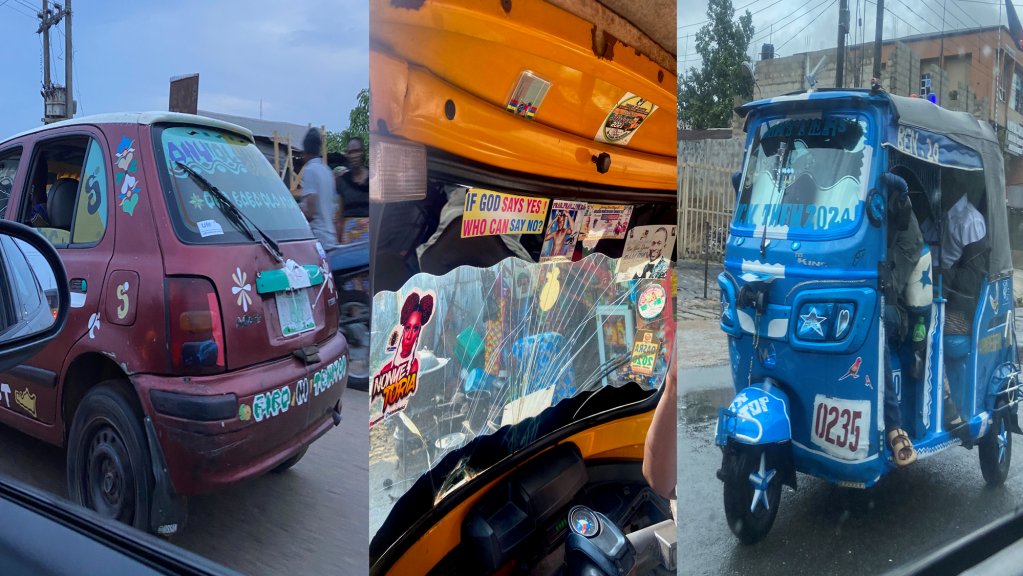
Typography in this context entails the process of designing typefaces and is the basis upon which slogans are formed. Their medium (paint or vinyl) is dependent on the vehicular surface viable with smaller vehicles opting for vinyl and larger for paint. The history of typography in Nigeria is vague due to its interconnectedness with the introduction of English language via missionaries and pre-colonial powers, however signage artists have been able to improve upon techniques taught. Their work on the signature danfo and stamp fonts is evident in Lagos streets. Their chromatic type has its origins in America in the late 1800’s like the font that Danfo is based on. The manner with which these fonts have been modified, although not unique to Nigeria, captures our distinct flair and charismatic charm. The accompanying slogans, an extension of the Nigerian charm, embodies hopes, dreams and manifestations of different aspects of Nigerian life. Our appropriation of the English language has allowed for a distinct tone evident in the religious messages and acclamations which make the bulk of written text on transportation vehicles. The similarities between type founders and signage artists in the creation of fonts for slogans via stenciling, hand cutting and other unique techniques is well grounded.
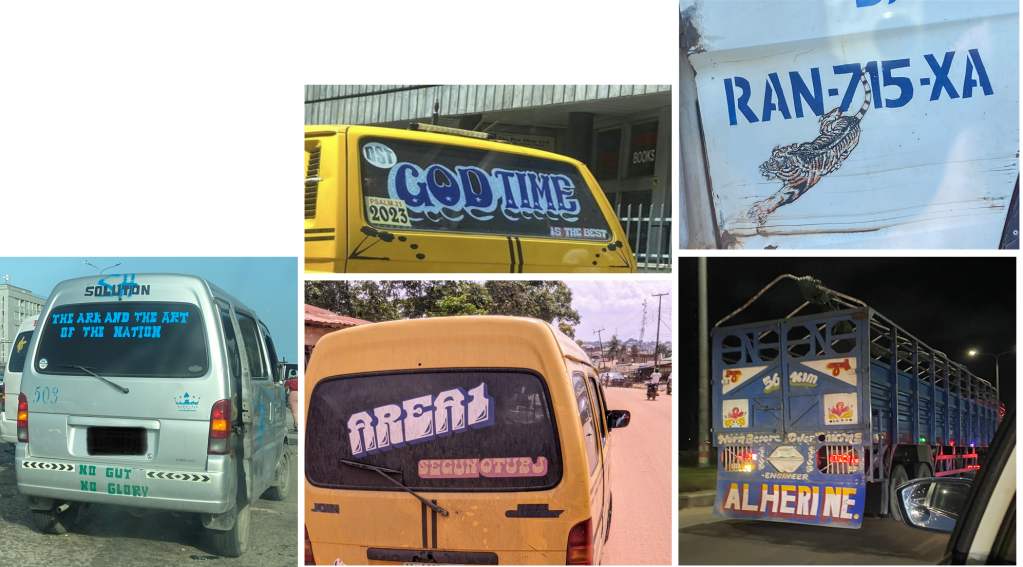
Similarly, the presence and technique in vinyl composition, the most common transportation decor, is a result of its increased accessibility and cheap price. Besides slogan and typography, vinyl is also used for framing, concealing and emphasizing various parts on commercial vehicles.
ONITSHA MARKET LITERATURE
In the 1960’s Onitsha grew to become the home of literature by and for Nigerians. It comprised Inexpensive pamphlets and booklets covering themes of religion, morality, love, family, politics, academia and other themes found in daily life. Made by schoolboys (Beier 1971), blue collar workers and other part time writers these books were mass produced in Onitsha for the everyday man, subsequently reaching all of Anglophone West Africa. The impact of these books on Nigerian literature and the wider West African literature history has been substantial; with Onitsha market literature authors like Cyprian Ekwensi being added to the Nigerian education curriculum and the popularity of The Last Days of Lumumba. The rise in urbanization , literacy post WW2 and independence agitations were substantial influences in the prevalence of Onitsha market literature (Obiechina 1973). Although the Onitsha market literature industry went through the Biafran War unscathed (Beier 1975), its prevalence is greatly reduced.
Onitsha market literature was a concerted effort by authors, printers, distributors and artists. The literature production, primarily based in Onitsha, spread to Aba, Port-harcourt and other eastern parts of Nigeria. As mentioned earlier, the skillset and commercial capacity of sign artists varied depending on their proximity to urban areas and the range of services needed by their clients. As a result, artists located in Onitsha and other hot spots of literature found themselves employed in the service of writers and printing houses. Local printing presses spruced up around 1940 making commercial scale printing readily available for writers. They employed the services of sign artists for book covers, Christmas cards (Dodson 1973) and other commercial graphic and printing needs. Onitsha is a prime instance of the varied capabilities of the sign artist.
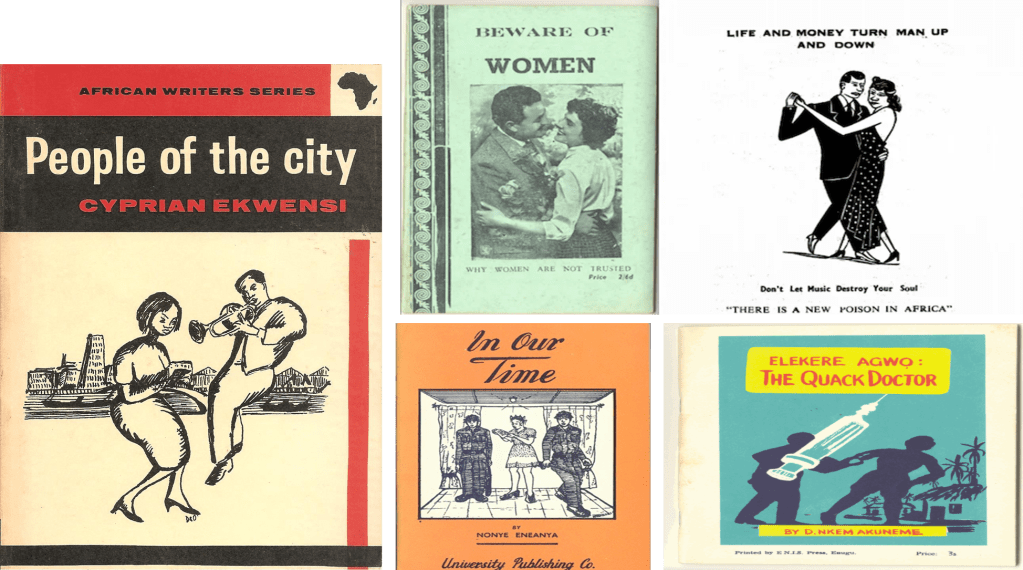
The style of book covers of pamphlets in Onitsha market literature takes from sign artists’ history; foreign cinema (Hollywood and Indian Cinema) and magazines. In the absence of Hollywood or Indian inspired hand drawn pictures as covers (Obiechina 1972), sign artists drew scenery and figures that were local but often westernized reflecting the aspirational nature of sign artists. Figures wore European style clothing that fit the local contexts of Nigeria. Simple sketches, strong lines and text along with local Nigerian scenery and context defined the covers created by local sign artists. Their contribution to the readership and culture of Onitsha has been largely uncovered, although notice of their style has been noted.
As book covers have been found to increase sales by at least 50%, the impact of signage artists to the larger literary industry is worth noting. Onitsha markets literature’s contribution to political awareness, the west african literary scene and Nigerian film industry allows us to further contextualize the impact of the work and style of sign artists.
Littattafan Sonyaya Hausa Romance Novels
On the heels of Onitsha market literature, emerged the literature industry dubbed as Kano Market lIterature. Described as contemporary Hausa fiction (Adamu 2018), this genre is dedicated to romance, love, marriage and other issues relevant to contemporary Northern Nigerian women. It has its origins in hausa literature and is written primarily by women. As a result, influences from hausa popular culture like Indian Cinema and Middle Eastern culture appear on book covers. Handwritten and sent off to a publisher, these books emerge with covers that display some of the most unique work of signage artists . Although it is primarily based in Kano (writing and production), it has audiences in all of Northern nigeria.
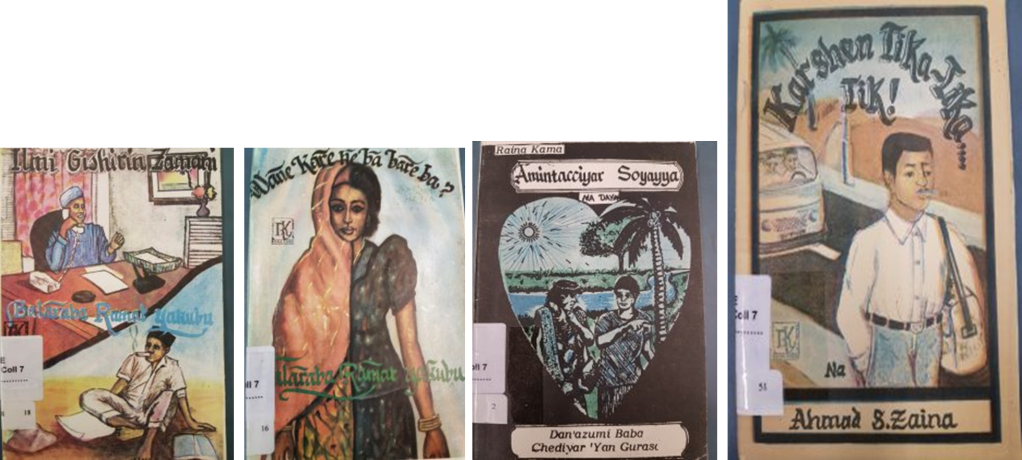
The art in littattafan sonyaya is figurative with an emphasis on shading, strong outlines and bright colors, a reference to signage artists style. It often depicts scenes of everyday life and figurative portraits of women. Characters were styled in contemporary hausa wear and European outfits, a commitment to everyday life and a nod to the aspirational nature of sign artists who are out of reach of the urban life they admire (Beier 1971). These paintings are accompanied with hand drawn text, a testament to the foundry capacities of sign artists. The origins of typography for signage artists in Northern Nigeria can be traced to the long history of the Arabic script and islam in the region (Adamu 2007) .
Bibliography
Books:
- Beier, Ulli. An African Popular Literature: A Study of Onitsha Market Pamphlets. Longmans, 1973.
- Obiechina, Emmanuel. Market Literature in Nigeria. Fourth Dimension Publishers, 2008.
- Adamu, Abdalla Uba. Hausa Language and Literature. Kraft Books Ltd, 2018.
Articles from Journals:
- Adamu, Abdalla Uba. Hausa Language and Literature. Kraft Books Ltd, 2018.
- Beier, Ulli. “PUBLIC OPINION ON LOVERs.” African Arts, vol. 7, no. 2, Summer 1966.
- Beier, Ulli. “Signwriters Art in Nigeria.” African Arts, vol. 4, no. 3, Spring 1971, pp. 22-27.
- Beier, Ulli. “Middle Art: The Paintings of War.” African Arts, vol. 9, no. 2, 1976, pp. 21-23. JSTOR. Accessed 7 Sept. 2024.
- Cristofano, Mariaclaudia. “Signwriters in Ghana –from Handmade to Digital.” Critical Interventions: Journal of African Art History and Visual Culture, 2014.
- Dodson, Don. The Role of the Publisher in Onitsha Market Literature. 1973.
- Pritchett, Jack. “Nigerian Truck Art.” African Arts, vol. 12, no. 2, 1979, pp. 27-31. JSTOR. Accessed 7 Sept. 2024.
- Ross, Doran H. “THE ART OF ALMIGHTY GOD: IN HIS OWN WORDS.” African Arts, vol. 47, no. 2, 2014, pp. 8-27. JSTOR. Accessed 7 Sept. 2024.
- Lurkin, Brian. “Indian films and Nigerian lovers: media and the creation of parallel modernities.” Africa , vol. 67, no. 3, 1997, pp. 379-402.
- Mgbemena, Judith. “Language, communication on wheels and national development: The inscriptions on tricycle (Keke) example.” International Journal of English and Literature, vol. 4, no. 10, Dec. 2013, pp. 529-537.
- Schulze, Katrin. “Mosques, Palm Trees and Swords: Religious Symbolism in Northern Nigerian Lorry Decorations.” Annual Review of Islam in Africa, no. 11, 2012.
- Van der Geest, Sjaak. “‘Anyway!’: Lorry Inscriptions in Ghana.” African Arts, vol. 42, no. 3, 2009, pp. 42-49.
Websites:
- 52 Years of Nigerian Literature: Onitsha Market Literature (http://www.bookshybooks.com/2012/10/52-years-of-nigerian-literature-onitsha.html).
- 52 Years of Nigerian Literature: Hausa Popular Literature (http://www.bookshybooks.com/2012/10/52-years-of-nigerian-literature-hausa.html).
- Ogunlesi, Tolu. “What The Truck?” Bookshy Books, 52 Years of Nigerian Literature Onitsha Market, Oct 52, 2012, http://www.bookshybooks.com/.
- 1. apmba.ub.ac.id
- apmba.ub.ac.id
- https://www.tandfonline.com/journals/rcrc20/about-this-journal
 Danfo Yellow
Leave a comment